
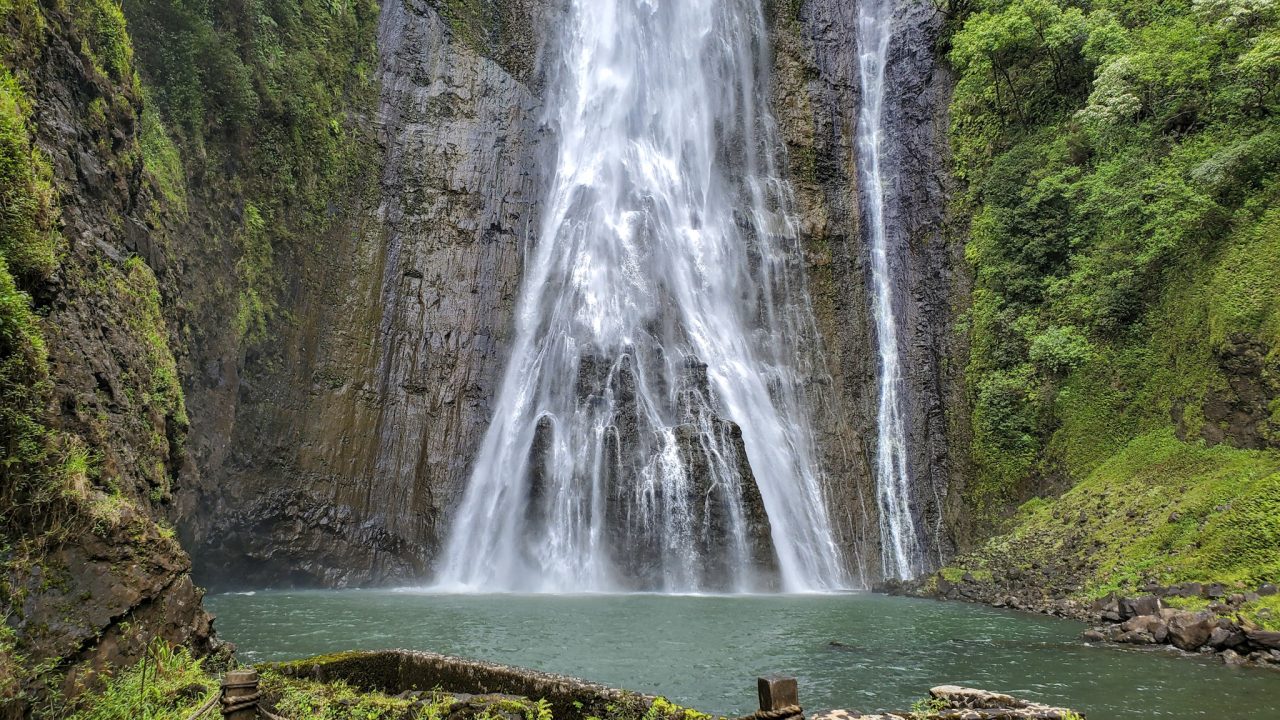
The Hawaii freshwater swim is easy to fall in love with even before you ever get here. The pool below the waterfall, the stream crossing on the way to Hanakapiai, the swimming hole after a hot hike. It is also where some visitors begin to ask questions, even if they do not always say them out loud. And we have been getting a lot of these questions after this spring’s heavy rains. Is that perfect-looking pool actually safe, or is it one of those epic Hawaii things that changes once you’re right there in front of it?
One reader, Stephen, wrote to us, worried about all the stormwater runoff putting swimmers at risk. He’s right to ask. The obvious dangers are easy to picture: slippery rocks, fast-rising streams, flash floods in heavy rain. But there is another freshwater risk here that gets very little attention, and it is the one we want you to know about before you go in.
The one risk nobody explains before you head in.
The risk is leptospirosis, a bacterial illness that occurs in Hawaii more often than many visitors realize. It is not a reason to panic, nor to write off every waterfall, pool, or stream on your vacation.
The bacteria come from the urine of infected animals, including rats, mongoose (other than on Kauai), pigs, cattle, and dogs. They can survive for weeks or months in freshwater and wet soil, but only hours in saltwater.
That single word difference explains a lot about how we even think about Hawaii water. The ocean and a stream are not the same thing, even when they meet at the very same beach.
Exposure can happen through cuts or scratches, through the eyes, nose, or mouth, or by swallowing contaminated freshwater. Putting your head underwater raises the risk, and untreated stream or pond water should never be swallowed.
Why we give this one Kauai stream a wide berth.
We have always steered clear of Nawiliwili Stream. Kalapaki Bay next to it is another story.
Nawiliwili Stream feeds into Kalapaki near Lihue, and the stream itself has long been a place we avoid, especially after rain. The bay beside it is a normal surf and swim spot where residents are in the water regularly.
Both things can be true because they aren’t the same water. The bay is saltwater, where these particular bacteria survive only briefly. The stream is freshwater, where bacteria can persist, and the brown plume after rain is where the line becomes visible.
To be clear, there is no documented leptospirosis case file on Nawiliwili Stream. The known pollution concerns there involve enterococcus, a fecal-indicator bacteria tied to runoff. We avoid it on the broader principle, in this case not because of a specific lepto record.
Our rule regarding freshwater is the same as the one most other residents follow. When a stream is brown, murky, or carrying runoff into the ocean, we do not treat it like ordinary beach water.
The Department of Health has issued recurring brown-water advisories for this area after heavy rain, and those advisories include the standard leptospirosis caution. Surfrider Kauai testing has also shown the larger pattern visitors often miss, with surf breaks often testing cleaner while nearby streams remain chronically polluted.
What changes after heavy rain.
The biggest practical trigger for concern is rain. Leptospirosis risk rises during and after heavy rain and flooding, when animal urine can wash from soil into streams, ponds, and pools.
That is why the same brown-water rhythm we cover for beaches also applies to freshwater. After heavy rain, streams swell, waterfalls grow, pools turn cloudy, and the water can carry more than the obvious mud.
On Kauai, we are especially cautious around stream-fed beaches and freshwater pools after rain. We generally wait 48 to 72 hours after a heavy rain, and sometimes longer, because so many streams can feed beaches.
A late-2025 analysis from the University of Hawaii at Manoa and the Kauai District Health Office found that leptospirosis patterns across the islands track with rainfall. It fits what residents already watch in practical terms: not the calendar, but the water in front of us.
Brown, swollen, or murky water is a sign to skip it. A waterfall pool that looked inviting yesterday can be a different place after a storm.
What to watch for afterward.
Symptoms usually start within two weeks of exposure, though they can appear anywhere from a couple of days to a month later. The early signs look like the flu: fever, headache, chills, muscle aches, sometimes red eyes. That’s exactly why it gets missed. People connect a fever to a cold, not to the waterfall pool they swam in weeks ago in Hawaii.
The details to share with a doctor are simple but important. If flu-like symptoms show up after a Hawaii freshwater swim, stream crossing, or waterfall pool, say exactly that so the right test is undertaken.
What to actually remember.
Freshwater in Hawaii is often part of the vacation people came for, not something to fear. The risk changes mostly after heavy rain, when streams run brown, swollen, or murky, and that is when we stay out.
Cover cuts with waterproof bandages, keep freshwater out of your mouth, do not put your head under in questionable water, and never drink untreated stream or pond water. And if you get sick within a month of a Hawaii freshwater swim, tell your doctor. That one detail can change what gets tested, and it is the part most visitors never think to mention.
Lead Photo: © Beat of Hawaii at Manawaiopuna Falls on Kauai, aka “Jurassic Park Waterfalls.”
By Rob and Jeff, Beat of Hawaii.
Some of the most meaningful parts of Hawaii are the ones visitors walk right past without knowing they are there. We’ve spent nearly 20 years finding them firsthand for BOH as full-time Hawaii residents reporting on travel, culture, and island life, and telling you what they mean for your trip. Join us →
Get Breaking Hawaii Travel News


There are actually more risks.
The first is Naegleria Fowleri. It’s known as the “brain eating amoeba.” It’s rare, but universally fatal. If you get stream water up your nose, it enters your sinuses and then your brain.
The second is the dirty secret of all the islands: Hawaii is the last state in the country to ban cesspools. Federal law has forced commercial and multi-family properties to put in proper sewage treatment. Most homes in Hawaii are on cesspools. Just open bottomed pits where sewage gets dumped. They have until 2050 to remediate them. This means freshwater streams are universally contaminated if there are any homes upstream. Seawater is safe since salt water kills the bacteria, plus the ocean currents are strong and washi it away. For this reason it’s not a good idea to swim near the streams coming into the bays. For example, stay away from the two creeks coming into Kalapaki beach.
My husband was in the hospital for a week with Cellulitis!!! He had an open cut on his heel and walked through the water in the parking lot after the Merrie Monarch. The doctor said that this was very common in the islands! Be careful!!