
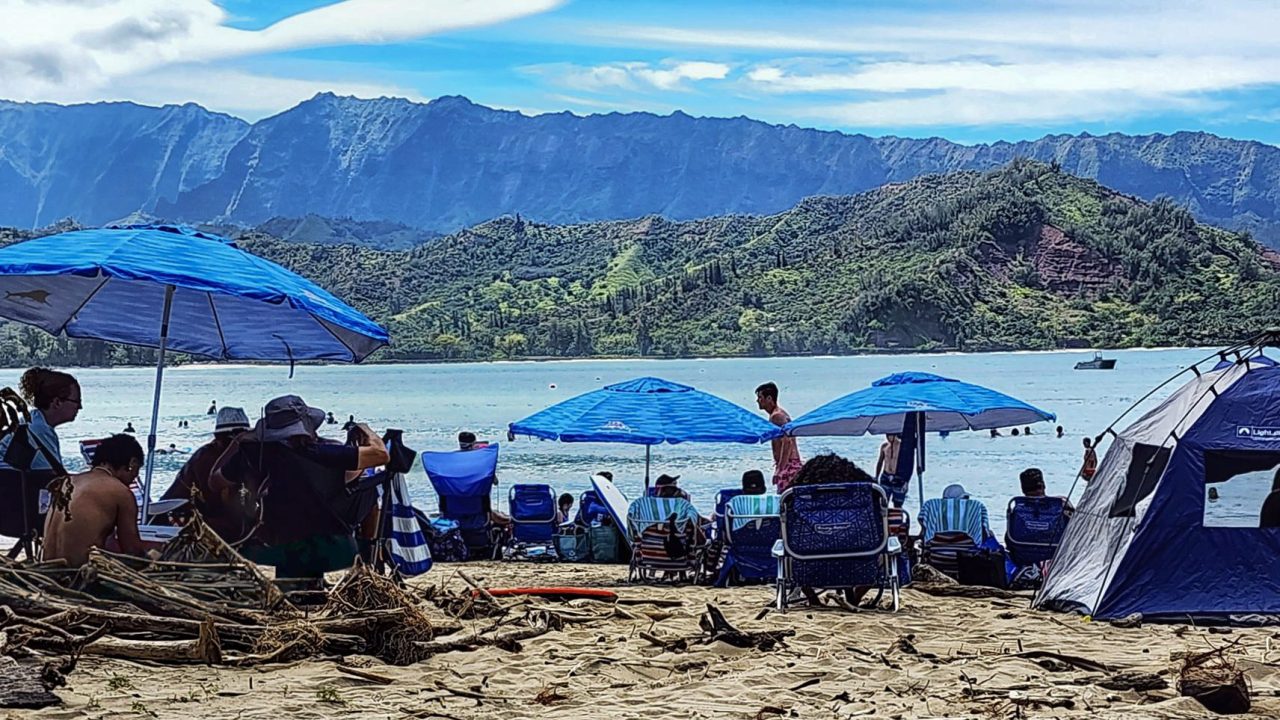
When people ask us to look at a Hawaii itinerary before they start their trip, the question is almost always the same. “Are we missing anything?” Less often do they ask the question that may matter more. “Are we trying to do too much?”
Over nearly twenty years at Beat of Hawaii, we’ve seen thousands of reader itineraries, emails, comments, and trip reports. Looking back, a pattern begins to emerge. What we hear more often isn’t regret about seeing too little. It’s discovering too late that adding one more stop didn’t make the vacation any better, and in fact, the contrary. Every stop looked worthwhile when they added it. The problem is that Hawaii vacations aren’t experienced as one stop or one decision at a time. They’re lived as a whole.
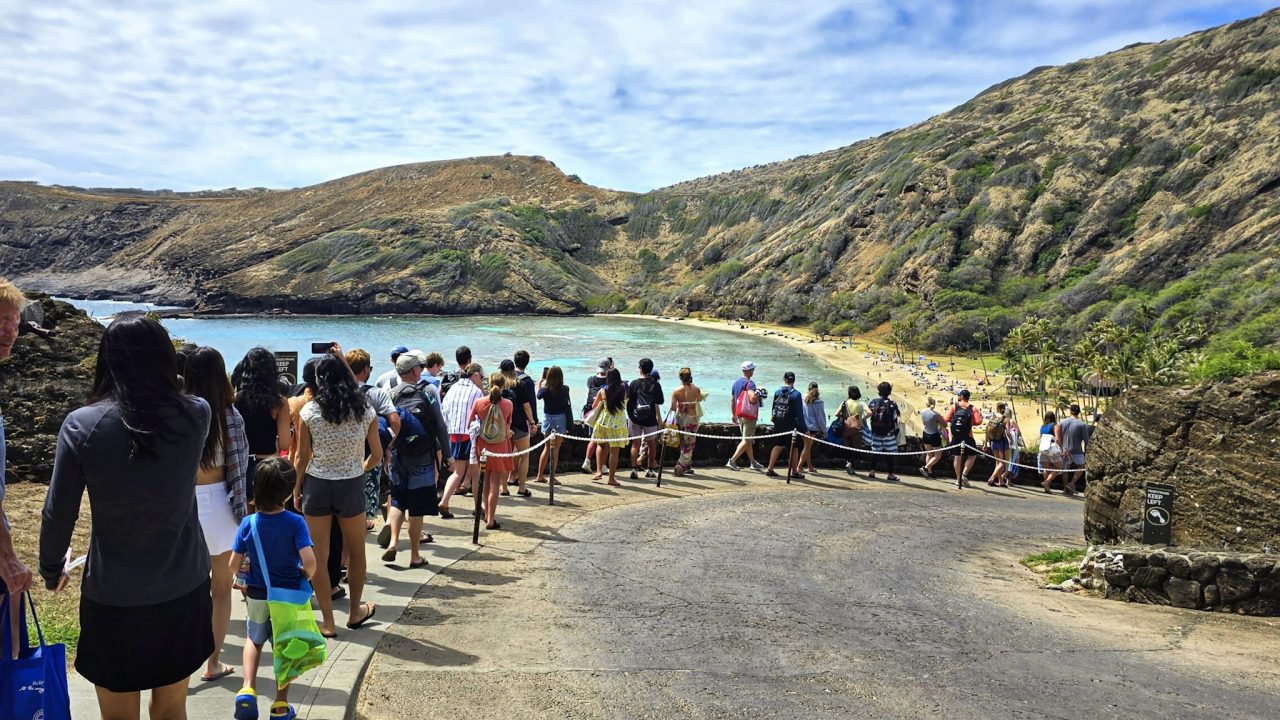
Why Hawaii almost encourages overplanning.
It’s easy to understand how it happens. Hawaii is expensive, many visitors have saved for years, and for some families this may be the only trip they’ll ever take together. That creates a natural urge to get as much out of the vacation as possible.
Social media helps reinforce it. Before leaving home, visitors may already have dozens of saved beaches, hikes, waterfalls, restaurants, overlooks, and other “don’t miss” experiences waiting in Google Maps or Instagram folders. Each one seems worth fitting in because, by itself, it likely is.
Reservations have changed the equation too. So much more of Hawaii now runs on advance bookings than it did a decade ago. Attractions, tours, restaurants, and activities increasingly ask visitors to commit to a specific day and time long before they arrive. Reservations aren’t what causes overplanning, but once they’re on the calendar, they become that much harder to rearrange. The experience begins serving the itinerary instead of the other way around.
None of that is to suggest that ambitious itineraries are wrong. Some people genuinely enjoy seeing as much as possible. Others would happily spend an entire week at one beach. The interesting question isn’t which approach is better. It’s where each traveler reaches the point where adding one more thing stops adding to the vacation entirely.
What each Hawaii itinerary stop really costs.
Not a cost in dollars. Most visitors already know what Hawaii will cost before they arrive.
The cost we’re referring to is measured in time, energy, and flexibility. One more stop might mean leaving a beach just as everyone finally starts to relax. It might mean another hour behind the wheel instead of lingering over lunch. It might mean hurrying through someplace that really needed another hour simply because something else is scheduled.
Hawaii is unusual because so many experiences naturally expand once you’re there. Hamoa Beach, meant as a thirty-minute stop, becomes the idyllic spot everyone wants to stay far later. The Hana Highway turns into half a dozen unplanned pullouts for waterfalls nobody researched in advance. Even finding parking at Waimea Canyon, or standing in line for shave ice in Hanapepe, reshapes the time spent in ways no map ever accounts for.
The drive may take exactly as long as Maps indicated. Everything that happens around the drive often does not.
Where crowded Hawaii itineraries begin to fall apart.
We’ve seen those tradeoffs reflected in reader comments for years. BOH reader William rushed the Road to Hana because he wanted to fit everything into a single day. Looking back, he told us he wished he’d stayed a few days in Hana instead of treating it as something to complete.
Paul K. said his biggest regret wasn’t choosing the wrong island. It was trying to divide the vacation between two islands when he and his family would have enjoyed spending the entire trip more deeply exploring just one. As he put it, they “should have stayed on one island and actually relaxed more and seen less.”
Don argued that slowing down has become nearly impossible “when everything you do needs a scheduled appointment or reservation.” Once those appointments are made, it’s easy to feel that the clock is controlling the vacation.
Glen Z. takes the opposite approach entirely, spending nearly a month in Hawaii because he and his wife no longer enjoy feeling rushed from one experience to the next.
None of those readers are necessarily right. They simply discovered where their own boundaries were.
Why experienced Hawaii visitors become more selective.
One thing we’ve noticed over the years is that experienced Hawaii visitors don’t always do less. They often just become more selective.
Instead of trying to fit another stop or attraction into a day, they spend longer where they already are. They become more willing to skip something they’d probably enjoy in order to spend more time somewhere they’re already enjoying.
Our own travel has evolved in much the same way. It’s not because we think everyone should vacation like Hawaii travel editors do. It’s because we’ve gradually learned that some Hawaii experiences reward lingering while others don’t change much whether you spend thirty minutes or three hours there. We can spend half a day at Hanalei Bay and still feel we left too early, while some scenic overlooks give us nearly everything we came for within the first fifteen or twenty minutes.
Someone visiting for the first time may reach completely different conclusions, and that’s perfectly reasonable. If you’ve dreamed of seeing as much of Hawaii as possible, an ambitious itinerary may be exactly what makes the trip memorable. Another visitor may come home saying their favorite afternoon was the one they never planned at all. Neither approach is wrong, and both can produce exactly the Hawaii vacation someone hoped for.
When one more Hawaii stop becomes one too many.
This isn’t really an article about slowing down. It’s about recognizing tradeoffs before they’re locked into the calendar.
If adding one more stop means leaving your favorite beach an hour early, driving farther than you expected, skipping an unplanned conversation, or missing a sunset because dinner is already booked, is that addition still making the vacation better?
For many visitors, the answer will be yes. For many others it won’t.
What we’ve learned after nearly twenty years of reading your itineraries and your trip reports is that there isn’t a perfect Hawaii itinerary waiting to be discovered. There is only the one that matches the kind of traveler you are.
We’re interested in where that point is for you. Do you enjoy fitting as much as possible into every day? Have you found yourself cutting things from later trips? Or do you think the whole idea depends entirely on the traveler?
Lead Photo Credit: © Beat of Hawaii at Hanalei Bay.
By Rob and Jeff, Beat of Hawaii.
Some of the most meaningful parts of Hawaii are the ones visitors walk right past without knowing they are there. We’ve spent nearly 20 years finding them firsthand for BOH as full-time Hawaii residents reporting on travel, culture, and island life, and telling you what they mean for your trip. Join us →
Get Breaking Hawaii Travel News




Stay longer. Plan less. And when you do schedule an activity, build in a lot of extra time and go with the flow.
Last year one of my cousins and his family went to Oahu and Kauai. The daughter-in-law, who is a big traveler, planned most of the itinerary which had something scheduled for every morning, afternoon and evening. By the last day, my cousin who is in his upper seventies, was exhausted. I was staying on another part of Kauai and met him in mid-morning. While the others went off on another adventure, we spent a couple of hours sitting on lounge chairs, in the shade, on Kalapaki Beach and then went to lunch. That may have been the best part of the trip for him.
We’ve been going to Hawaii for 30 years. Our first trips were 2 islands, until we realized how much of a day is lost in transfer. We decided on one island, almost always Kauai. When we first went, we did everything – golf, snorkeling, boat tours, etc. As we grew older, we realized the joy of not doing too much in one day, and even having a day to do nothing except enjoy the view and air. Of course, that meant a longer stay. We not stay for 3 weeks and enjoy every minute of it.