
We are looking for other places to snorkel on Oahu when Hanauma Bay closes from August 3 through August 11. The timing isn’t great as many summer visitors arrive on Oahu expecting to snorkel at the island’s most famous marine preserve. The planned nine-day shutdown is needed while Honolulu replaces and rehabilitates parts of the 35-year-old sewer system serving the beach and parking areas.
That leaves us with a practical problem that started coming up as soon as the closure was announced. Where should we snorkel instead, and is there anywhere else on Oahu that offers anything close to the Hanauma Bay experience?
There are some good alternatives, especially during the generally calmer North Shore summer season. But after looking closely at the options, for us, there is no simple substitute, and some of the places most often recommended online demand far more ocean experience than Hanauma Bay visitors may be expecting.
Why Hanauma Bay is so difficult to replace.
Hanauma Bay combines several things you just won’t find together at other Oahu snorkeling beaches. There is a protected marine environment, controlled and limited admission with required orientation, lifeguards, restrooms, rental equipment, and relatively easy access to the water. The reef itself is one where fish can often be seen very close to shore.
That highly managed experience can also be frustrating in our experience, especially when visitor reservations disappear quickly, or another closure interrupts Hawaii vacation plans. We wrote about that changing visitor experience in Hanauma Bay Shake-Up, including the new transportation packages and increasingly structured way visitors take part in the preserve.
The same management that makes Hanauma complicated, however, also helps make it different from most other beaches visitors find. Other options may not have lifeguards, controlled access, easy entry, or some combination of these.
Shark’s Cove may be the most obvious summer alternative.
Shark’s Cove on the North Shore will appear near the top of almost every list of Oahu snorkeling alternatives, and August is generally a great time of year to consider it. The cove sits within the Pupukea Marine Life Conservation District and can have excellent visibility, abundant and colorful reef fish, and interesting lava formations when North Shore conditions are calm.
It does not, however, offer anything close to Hanauma Bay’s ocean entry experience. The shoreline is rocky, footing can be difficult, and getting in and out may be uncomfortable for anyone with balance or mobility concerns. Parking is also challenging, and facilities are far more limited than visitors expect at such a well-known spot.
Shark’s Cove changes completely when the surf rises, even outside the traditional winter season. Hawaii Ocean Safety currently classifies it as a location where everyone swims at their own risk, which makes checking same-day conditions essential rather than optional.
Kuilima Cove may feel easier for some of us.
Kuilima Cove, beside Turtle Bay Resort on the North Shore, is another alternative that is mentioned repeatedly. Its protected shape and sandy entry can make it feel more approachable than Shark’s Cove when conditions are calm, especially for families and those of us who do not want to climb across sharp rocks.
The snorkeling area is smaller and often less dramatic than iconic Hanauma Bay, and conditions still determine what visitors will find once they actually arrive and enter the water. It can, however, be a more realistic choice for someone looking for a gentler beach entry rather than the most adventurous reef location on Oahu.
Everyone should also understand that “protected” does not mean guaranteed calm. Wind, waves, visibility, and ocean currents can change, and there may not be a lifeguard providing the extra layer of reassurance that many Hanauma Bay visitors expect.
Waikiki has one snorkeling area many visitors overlook.
Visitors staying in Waikiki do not necessarily need to take the long and traffic-laden drive to the opposite side of Oahu. The Waikiki Marine Life Conservation District extends from the end of Kapahulu Avenue to the ewa (west) wall of the Natatorium, where fish can gather along reef edges, channels, small caves, and areas with greater underwater relief.
This will not look or feel anything like Hanauma Bay. The reef is flatter, visibility can deteriorate when there is wave action, and the best areas may require more comfort in the water than visitors expect after looking at the shoreline from Waikiki.
Still, on a calm morning, the conservation district can offer a convenient alternative for visitors who mainly want time in the water and a chance to see fish without turning snorkeling into an all-day drive.
Electric Beach is not the replacement we would suggest for everyone.
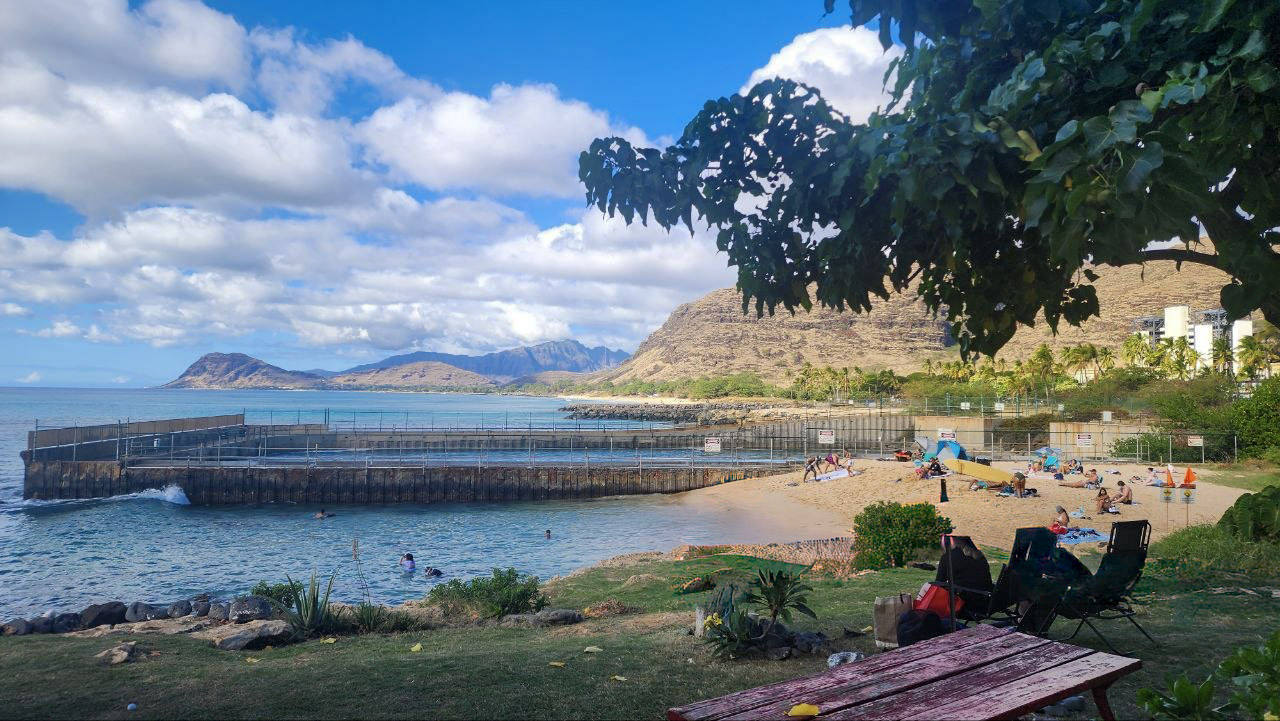
Kahe Point, commonly called Electric Beach (our lead photo), is often promoted as one of Oahu’s most exciting snorkeling spots because warm water discharged offshore attracts fish and other marine life. That description can make it sound like an obvious Hanauma Bay replacement choice, but the two experiences couldn’t be more different.
Reaching the primary snorkeling area involves swimming offshore, and visitors may encounter currents, surge, waves, and a more challenging entry. It is better suited to strong and experienced ocean swimmers and is not where we would send a first-time snorkeler simply because Hanauma Bay is out of commission.
This distinction is more important now with visitors who already planned a Hanauma Bay outing and may suddenly now be looking for an available substitute. An impressive list of marine life does not tell someone whether the beach is appropriate for their ability or what the ocean will be doing that morning.
A guided snorkel trip can be another replacement.
For some of us, the closest functional alternative to Hanauma Bay may not be another beach at all. A guided snorkel excursion can provide equipment, local knowledge, supervision, and a location selected for that day’s ocean conditions rather than an internet recommendation.
That does not eliminate snorkeling risk, and visitors still need to be honest about swimming ability, health, fatigue, and comfort in open water. It can, however, be a better fit than driving to an unfamiliar beach and entering without knowing where currents run, where the reef drops off, or whether conditions have changed. A guided trip also shifts the decision from needing to find the most famous alternative.
Hanauma Bay’s closure does not remove snorkeling risks.
We recently wrote about a visitor found unresponsive only about 10 feet offshore at Hanauma Bay, directly in front of a lifeguard tower. The incident was a reminder that even Hawaii’s most managed snorkel spot still carries drowning risk.
That concern becomes amplified when visitors move out from Hanauma Bay to locations without safety information, controlled attendance, or lifeguards. Someone who chose Hanauma because it appeared to be the safer and easier option should not assume Shark’s Cove, Electric Beach, or another unfamiliar shoreline offers the same degree of comfort and support services.
Snorkeling can look effortless from land, especially when the water appears calm. Visitors may still be tired from flying, unfamiliar with rental equipment, less comfortable in the ocean than they realize, or unaware that trouble does not always begin with just one large wave or any obvious panic.
The best alternative could also be waiting for Hanauma Bay to reopen.
The August closure falls between two regular days when Hanauma Bay is already closed each week. As we explored in Hawaii’s Treasures Close Weekly: How Visitors Are Reacting, those recurring shutdowns have also become part of visiting some of Hawaii’s most heavily used places.
Travelers arriving near the end of the project may decide that moving their Hanauma visit is easier than trying to replace it. Others may find that Shark’s Cove, Kuilima Cove, Waikiki, or a guided outing is a better fit with the rest of their Oahu vacation plans.
One obvious takeaway is not treating every beach with fish, reef, and other snorkelers as interchangeable. Hanauma Bay’s closure may send visitors somewhere new, but where they go should depend on the day’s conditions, their swimming ability, and the kind of snorkeling experience they were actually expecting.
Where would you snorkel while Hanauma Bay is closed? Do you have an Oahu alternative you would recommend, or would you rearrange the trip and wait for the preserve to reopen? We invite your comments.
Photo Credit: © Beat of Hawaii at Electric Beach on Oahu.
By Rob and Jeff, Beat of Hawaii.
Some of the most meaningful parts of Hawaii are the ones visitors walk right past without knowing they are there. We’ve spent nearly 20 years finding them firsthand for BOH as full-time Hawaii residents reporting on travel, culture, and island life, and telling you what they mean for your trip. Join us →
Get Breaking Hawaii Travel News

IMO Hawaii is making it so hard to snorkel anywhere limiting access by charging admission, parking fee’s, etc. The solution is simple. It’s called your hotel swimming pool. Just where the state and residents wish all tourists would stay put. Book your vacation to Hawaii and call it a Staycation.
We have spent little time on Oahu but have done some snorkeling. Never have done Hanamu Bay so can’t use it as a basis to compare with. Shark Bay was OK but not a lot of fish, at least when we were there. We have recommended Electric Beach to friends as we found it interesting. We spent time over the discharge pipe and there was quite a bit to see. But we also went laterally over the “natural” bottom with coral and rock which was pretty good. Of course, we were younger and stronger then, too. But if you are comfortable in the water already I would recommend it.
Lanikai Beach is always a favorite of mine with gentle waves and lots of coral formations. There will also be an occasional honu or two as well. Parking is the biggest challenge here.