One of our readers called night snorkeling with manta rays near Kona Airport “one of the scariest, coolest things I have ever experienced.” That’s surprising enthusiasm for an excursion that can leave people cold, seasick, and hundreds of dollars poorer, sometimes without seeing a single manta.
We’ve done this excursion ourselves, and we understand that excitement. Previously, we went night snorkeling with manta rays near Kona Airport, an experience we then described in our earlier manta ray story as “totally unforgettable.” We’ve also encountered mantas elsewhere in Hawaii, including from land at Hapuna Beach.
What the excursion is actually like.
Anyone expecting a traditional snorkeling trip, swimming around looking at colorful fish and exploring underwater reefs, might really be surprised. On most manta night snorkels, participants hold onto a floating board with powerful underwater lights and stay largely stationary as they look down into the cool, dark ocean.
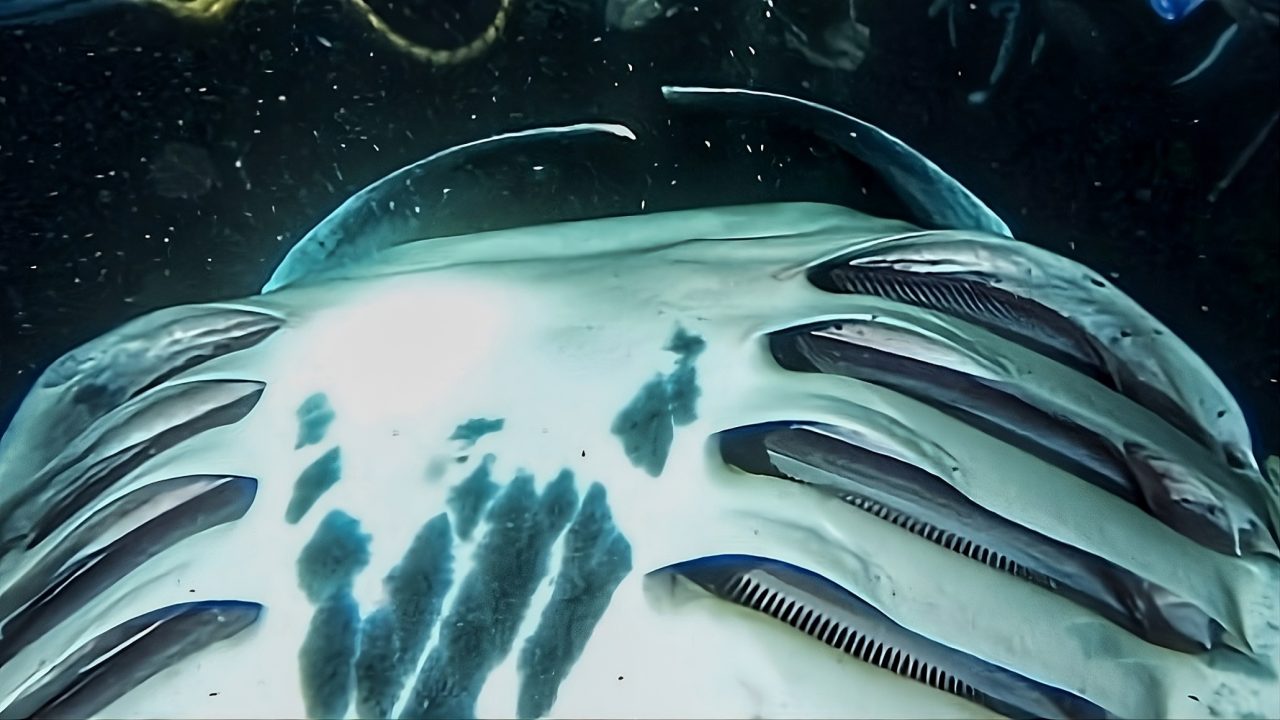
The lights attract plankton, which attracts hungry manta rays. When the animals arrive, they can glide within inches of snorkelers, sometimes performing repeated barrel rolls as they feed. These enormous creatures have wingspans of more than 10 feet, and watching one approach directly beneath you is a completely different experience than seeing any photograph or video.
There’s no touching, chasing, or swimming after the animals. Snorkelers generally spend 30 to 45 minutes in the water, depending on the operator, and the mantas determine how close they approach and how long they remain nearby. For people used to exploring independently, holding onto a board for that long might sound positively boring, but we didn’t find it to be. It was memorizing.
Certified scuba divers have another option: watching the mantas from below as the animals swim overhead. Some divers prefer that perspective, although it requires certification and is an entirely different excursion from the surface snorkeling.
What our readers experienced.
Deb described snorkeling near Kona Airport while her husband scuba dived. A manta approached and performed three barrel rolls directly beneath them, something she remembered years afterward. She was struck by its size and grace and said she’d definitely do it again.
Rene had night dived with mantas in both 2003 and 2016, at two different locations. The earlier encounter was far less of an organized tourist production, but the memory of the animals’ graceful approach remained vivid years later.
Christie described so many boats and people during a nighttime manta excursion that she wouldn’t go again, and said the commotion was why she doesn’t mention the trip. Another reader, Mark, reported questionable equipment and no marine safety briefing during a Keauhou Bay excursion. These comments span several years, so they aren’t evaluations of today’s operators.
What manta snorkeling costs in 2026.
At Keauhou Bay, Sea Paradise currently lists adult manta snorkeling at $130, plus taxes and fees, including wetsuits and snorkeling equipment. Kona Ocean Experience advertises a $135 twilight excursion and a $145 later night tour, including taxes, fees, wetsuits, and equipment.
Big Island Divers advertises snorkeling from $129 on its tour overview, although its detailed snorkel page lists $149 before taxes and possible gear charges.
For four people paying adult rates, that’s roughly $520 to $800 before applicable extras, depending on the operator and pricing available. There’s no way to know that spending more guarantees a better encounter with the mantas, although the boats, group sizes, equipment, and amenities can vary considerably.
One of the biggest differences is where the excursion starts. Tours leaving Keauhou Bay generally visit nearby Manta Village, and some operators advertise a boat ride of about five minutes each way. Honokohau Harbor departures commonly visit Manta Heaven near Makako Bay and Kona Airport, where we had our own memorable encounter. Depending on the operator, viewing location, and conditions, boat rides can take roughly 20 to 40 minutes.
For someone prone to seasickness, keep travel times in mind. The return can be particularly unpleasant for passengers who may already be cold, tired, or nauseated. Sea Paradise operates a larger sailing catamaran with restrooms and other amenities, while some companies use smaller, faster vessels.
When you pay, and no mantas appear.
Several operators advertise manta guarantees, but “guarantee” doesn’t necessarily mean you’ll see an animal or get your money back if you don’t. Sea Paradise offers a free return within seven days when no mantas appear, on a space-available basis, rather than a refund.
Big Island Divers offers guests who see no mantas either a 50% discount on another charter with a guaranteed seat or a free standby return, subject to availability. Kona Ocean Experience offers another scheduled excursion at no charge, as space permits. Manta Ray Night Snorkel Hawaii similarly offers a free standby return.
Consider a family spending $600 on an excursion during a final evening of their Big Island vacation. If no mantas appear, a complimentary return trip may be of little practical value if they are at the end of their Big Island vacation. Thus, we highly recommend planning in advance and not going on the very last day when flying home the following day. And remember that a second trip remains subject to availability and the operator’s policies. Anyone for whom a no-sighting evening would be a major financial disappointment should understand that before buying.
Reasons to think twice before booking.
Holding onto a flotation board may sound easy, but this isn’t necessarily an appropriate excursion for someone who cannot swim. Manta Ray Night Snorkel Hawaii requires participants to swim 50 yards without flotation, have intermediate snorkeling ability, and climb a boat ladder without assistance. Sea Paradise doesn’t allow non-swimmers into the water, although it offers a ride-along option. Big Island Divers also requires confident swimming ability and doesn’t permit life jackets during its manta snorkels.
We recently examined these discrepancies in Hawaii snorkeling operators’ conflicting safety advice. Flotation equipment doesn’t eliminate the need to be comfortable and capable in open water, especially after dark.
Wetsuits help with warmth, but participants can still become cold while floating relatively motionless. There’s also the matter of being comfortable in dark water, close to very large animals, even though mantas don’t have the dangerous stingers associated with some other rays.
There’s also the question of how many boats and people should share these wildlife encounters. We examined those concerns in Hawaii’s Famous Manta Rays Now Caught Between Celebration And Survival. Proposed state regulations governing commercial manta viewing remain listed among DLNR’s draft rules as of November 2026.
Have you done the Big Island manta night snorkel? What did you pay, and would you do it again?
We’re especially interested in hearing from those of you who’ve experienced a manta excursion that didn’t go as expected, whether because of limited sightings, crowding, or other problems.
Photo Credit: © Beat of Hawaii.
By Rob and Jeff, Beat of Hawaii.
Some of Hawaii’s most meaningful parts are the ones visitors walk right past without knowing they are there. We’ve spent nearly 20 years finding them firsthand for BOH as full-time Hawaii residents reporting on travel, culture, and island life, and telling you what they mean for your trip. Join us →
Get Breaking Hawaii Travel News