
A Beat of Hawaii reader, Steve, bought travel insurance before his Kauai trip this week. Then Hurricane Lowell hit, leaving widespread damage, prolonged power outages, disrupted businesses, and a visitor experience that looked nothing whatsoever like the vacation he had booked.
“We bought the insurance,” he told us afterward. “It has turned out to be worthless if the property isn’t destroyed.” In another comment, he put it even more directly: “Unless the place is blown away they won’t pay.”
We haven’t seen Steve’s policy or his claim, so we can’t say whether his insurer should pay. What we can say is that his experience points to a problem we’ve been writing about for nearly 20 years: buying travel insurance and understanding exactly what it insures are two completely different things.
Back in 2016, we wrote that insurance “isn’t some kind of blanket that protects us and keeps us warm. It is all very specific. Annoyingly so.”
A decade later, following another round of Hawaii hurricanes and natural disasters, that warning feels considerably less theoretical.
A damaged Hawaii vacation isn’t automatically an insured loss.
Our latest look at Kauai after Hurricane Lowell showed how complicated that distinction can become. Much of the island lost electricity, some businesses weren’t functioning normally, brown-water advisories affected beaches, roads and utilities were severely disrupted, and conditions varied dramatically just from one place to another.
Yet imagine that your particular hotel or vacation rental still had a roof, electricity, and access. You might reasonably conclude that the vacation you paid for had been substantially compromised, while an insurer looking at the contract could arrive at a very different conclusion.
Allianz says a natural disaster can trigger cancellation or interruption coverage when a destination becomes “uninhabitable,” but defines that around damage serious enough to make the accommodation inaccessible or unfit for use. Closed amenities, changed surroundings, and other travel disruptions may not reach that threshold.
Generali similarly describes coverage tied to events such as mandatory evacuation, an uninhabitable accommodation, or a qualifying flight disruption. Its hurricane guidance also notes that if an evacuation order ends before a traveler arrives, coverage may not apply unless some other covered event prevents the trip, which is a much narrower promise than “a hurricane ruined my Hawaii vacation.”
The storm may be covered, but timing can decide everything.
Hurricanes create another problem because coverage can change before any damage occurs. Many, if not most, current policies treat a named tropical storm or hurricane as foreseeable. That means that travelers can’t wait until a storm like Lowell is moving toward Hawaii and then decide to buy insurance against it. Travelex gets even more specific: one current policy requires the hurricane or tropical-storm warning to fall within 24 to 120 hours before departure.
What controls the claim is the specific covered hurricane event. Is it an evacuation, uninhabitable lodging, travel delay, trip interruption, or another defined trigger in the policy?
“Cancel for any reason” still doesn’t mean you get everything back.
Travelers often turn to Cancel For Any Reason coverage, or CFAR, because it expands the circumstances under which someone can walk away from an insured trip. It can be especially useful when a traveler simply doesn’t want to go even though none of the policy’s standard covered reasons have occurred.
The name is significantly broader than the benefit it offers. Squaremouth’s current analysis of more than 100 policies says CFAR typically reimburses 50% to 75% of insured trip costs, generally must be purchased within 14 to 21 days of the first trip payment, and usually requires cancellation at least 48 hours before departure. That’s clearly defined.
InsureMyTrip describes the same basic structure, including partial reimbursement and the usual advance-cancellation requirement. CFAR can protect a traveler who no longer wants to enter a storm recovery zone, but it isn’t a promise to return every dollar lost when plans change.
Our readers don’t agree that everyone should buy it.
The comments we’ve received are more useful than pretending there is one answer for everybody or that travel insurance is something that is easy to buy. Some readers consider travel insurance nearly automatic, while others have traveled for decades without it and would rather accept the financial risk themselves. That calculation has changed over the years as Hawaii trips have become more expensive, because declining coverage can now mean accepting a much larger potential loss.
Pressure to buy trip insurance coverage.
Steve D. captured the question precisely following another Hawaii cancellation dispute. “There’s always so much pressure during rentals and during airfare purchases to buy insurance,” he wrote. “But what are you buying exactly?”
Gail told us she and her family had made more than 100 domestic and international trips and generally didn’t buy travel insurance. In another comment, she explained that the exclusions seemed to cover too many of the problems she worried about, although she also described a separate AAA claim that paid quickly and in full.
Paul S. takes a different approach. He said he almost always buys insurance for vacation rentals but doesn’t assume that guarantees a refund, adding a rule of his own: “if I can’t afford to lose it I don’t book it.”
Other readers have seen insurance perform exactly as they had hoped. And we’ll largely put ourselves into that category. Nancy described a family medical emergency in Spain after her father suffered a stroke and said the policy paid for his trip home with an aide as well as other related expenses, although she later stopped buying coverage for Hawaii trips simply because of the cost.
Travel insurance spans an enormous range of contract clauses, circumstances, and claims. The label alone tells you surprisingly little about what will happen when something specific goes wrong.
We’ve seen both sides ourselves.
In one of our first travel insurance claims, we once paid about $150 for a policy that returned more than $600 after a mechanical cancellation caused a missed connection, extra transit costs, lost accommodations, and delayed baggage. The claim was straightforward; we had the documentation, and that 2017 experience made a strong case for buying travel insurance.
Our most recent experience was different. After an Air Rarotonga engine problem disrupted a trip, IMG approved our entire $744.72 claim in only 18 days, but the payments arrived piecemeal and turned into a months-long chase, with InsureMyTrip repeatedly intervening before we finally received what had already been approved.
That experience added another consideration to how we shop. As we wrote in our Hawaii trip insurance claims story, we still use comparison sites such as InsureMyTrip and Squaremouth, but we now pay closer attention to who underwrites and administers a policy and whether the seller will help when a claim stops moving forward.
Vacation rentals create another layer of risk.
Earlier this summer, we wrote about a Hawaii family that lost roughly $12,000 on a vacation rental after canceling during a severe weather event. Their airline provided credit, while the rental remained governed by its own cancellation terms because Vrbo had not activated its emergency protection for their situation.
That story generated repeated advice in the comments to “buy trip insurance.” Yet reader Trudy said she assumed changing booking platforms might solve the problem, only to discover that insurance during storm events wasn’t nearly as clear as she expected.
A vacation-rental owner raised the issue from the other side, asking why the owner should effectively become the guest’s insurer when the traveler’s policy itself wouldn’t cover the event. A rental contract, a platform’s disruption policy, and a separately purchased insurance policy are three different agreements, and none automatically fills every gap left by the others.
The clause you need may be nowhere near the word hurricane.
Before buying coverage today, we’d spend less time asking whether a policy “covers hurricanes” and more time identifying the exact event that could cost us money. A traveler worried about storms should know how the contract defines an inaccessible or uninhabitable property, what length of flight delay activates benefits, whether a mandatory evacuation qualifies and what happens if transportation eventually resumes after a significant part of the trip has already been lost.
Loss of electricity deserves the same scrutiny because a blackout that makes a vacation miserable may not meet a policy’s definition of an uninhabitable accommodation. The relevant trigger could also be hard to find, buried under trip interruption, travel delay, or evacuation language rather than anything labeled hurricane coverage.
We’d also look at protection we already have before paying for more. Refundable reservations, airline credits, credit-card benefits and existing health coverage can reduce the amount actually at risk, while medical evacuation or other specialized protection may be far more valuable to some travelers than reimbursement for a hotel night.
None of that makes trip insurance worthless, and our own claims history clearly proves otherwise. Paying the premium simply doesn’t replace understanding specifically the contract you bought.
After Lowell, reader RP responded to Steve’s frustration by asking whether he’d read the complete policy before buying it. He also pointed out that most of us routinely accept terms without paying much attention to the fine print until something goes wrong. And by then it is far too late.
For a Hawaii trip that can now run into many thousands of dollars, that may be the better question than whether to buy insurance at all.
What did you think your travel insurance covered when you bought it, and have you ever discovered something different when you actually filed a claim?
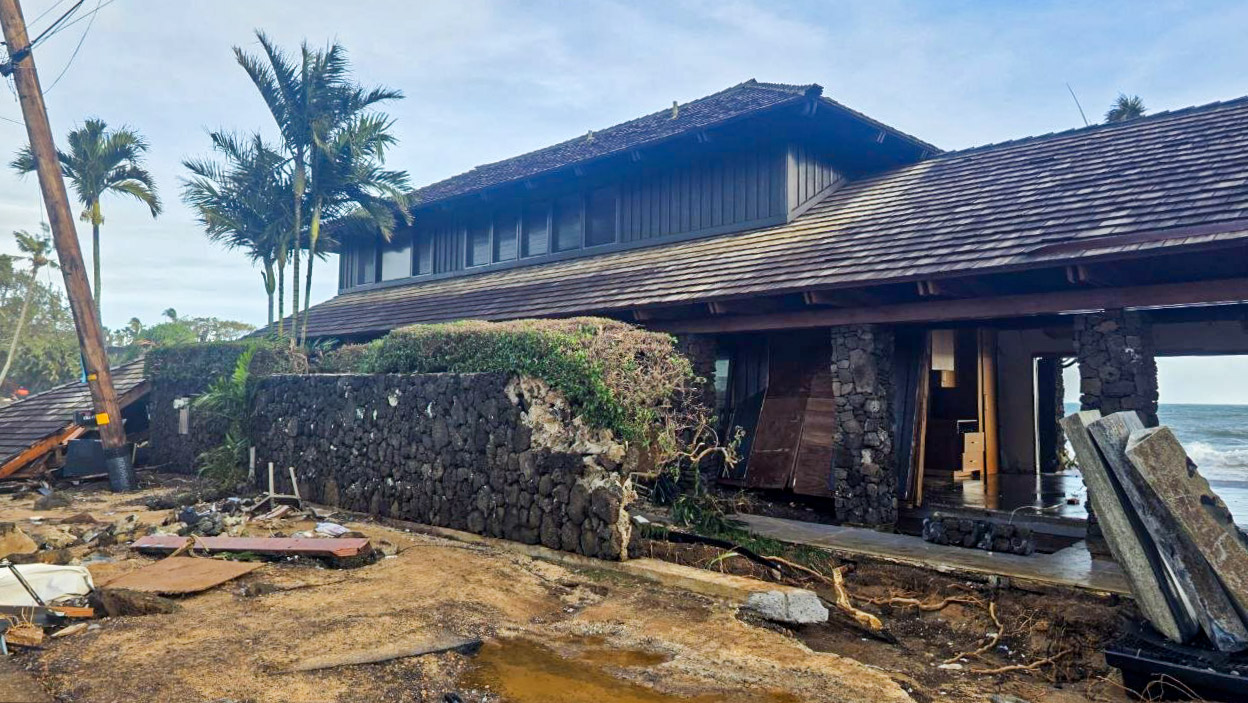
Lead Photo Credit: © Beat of Hawaii. The picture shows a Poipu vacation rental after Hurricane Lowell.
By Rob and Jeff, Beat of Hawaii.
Some of the most meaningful parts of Hawaii are the ones visitors walk right past without knowing they are there. We’ve spent nearly 20 years finding them firsthand for BOH as full-time Hawaii residents reporting on travel, culture, and island life, and telling you what they mean for your trip. Join us →
Get Breaking Hawaii Travel News



“…others have traveled for decades without it and would rather accept the financial risk themselves”
The problem is that people say this but often when the time comes to actually accept that risk, they whine and complain and blame everyone else for not taking on that risk for them.
Your very first example highlights to my the insurance is worthless. For $150 premium, you got a payout of $600. The simple math says that if you’re not getting a payout every four trips, it’s not worth it.
I’m on the same page as Paul S. If I can’t afford to lose it, I’m not going. Sure, I’ll be frustrated, but I’ll live.