
The best Beat of Hawaii stories rarely end when we hit publish. They continue in the discussion that follows, where readers like you compare experiences, challenge assumptions, and often put words to something we were only beginning to recognize ourselves. After publishing more than a quarter million reader comments over the years, we’ve learned that some of our strongest reporting has continued long after the final paragraph.
This time, the stories begin in very different places. One starts at a national park that few people can now visit. Another begins at a resort property that sat empty for 34 years before securing nearly half a billion dollars in financing. The third takes us to a beach that once came with the room and now carries its own daily price tag. Every month, we are highlighting some of your comments on Beat of Hawaii to keep the discussion evolving.
A national park in Hawaii that the public cannot enter.
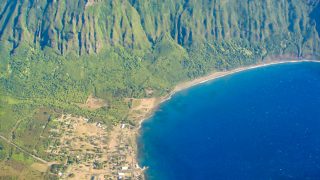
Kalaupapa has entered another chapter that few people expected. Guided tours ended in June with the passing of Aunty Meli Watanuki, whose family had welcomed visitors for decades. The National Park Service restarted tours in July under a new arrangement, only to suspend them again two days later after Molokai residents blocked access in protest.
That left visitors wondering whether Kalaupapa should remain accessible at all, even in a limited way. The debate quickly moved beyond logistics and into something much more difficult.
If a place carries national significance and deep personal meaning at the same time, who should decide how it is experienced?
Wendy visited Kalaupapa more than a decade ago and still thinks about that day. She isn’t arguing for either side, and she says so plainly. What she voices is the uncertainty many readers found themselves in as the situation changed yet again.
“About 12 years ago, my husband and I were able to visit Kalaupapa on a day trip from Oahu. It was a very powerful experience for us both, and I am so glad we were able to go. I’m really torn about what should happen to Kalaupapa now. If it maintains its status as a national park, it should be open to the public in some fashion. But, perhaps it shouldn’t continue as a national park??? I really don’t know.” (Wendy)
The conversation changes after Wendy. Instead of asking what should happen next, another reader answers from a place very few people can. June visited Kalaupapa last November, but her connection did not begin with the tour itself.
Her family history is part of the landscape there. Her ancestors are buried at Kalawao and Papaloa, and she went to find their graves.
“I was blessed to visit Kalaupapa in November 2025. As I stood near St. Philomena Church, I gazed towards a field that is a mass grave of souls. It was painful to think of the living conditions they endured. I have ancestors buried in Kalawao and Papaloa cemeteries. I was thankful to be able to locate their graves at Papaloa, visit and pay my respects. So they would know they’re not forgotten.
That said, given the mentality and behavior of some visitors and social media influencers, I am all for Kalaupapa to be closed. I would be dismayed to see disrespect shown towards Kalaupapa, instead of appreciating the ‘gift’ that Kalaupapa is. Aloha.” (June)
Join the conversation on this article to express your opinion at: Hawaii Has A National Park The Public Can No Longer Tour.
Thirty-four years without a decision at this empty resort.
Across Kauai, another conversation has stretched across more than three decades. Coco Palms has stood empty since Hurricane Iniki struck in 1992, even as one redevelopment proposal after another appeared and disappeared. Now, the property has secured $431 million in financing, the largest financial commitment ever associated with the site.
For many readers, the size of the investment wasn’t the real story. Deborah looked past the financing announcement and focused instead on everything that never happened during those 34 years. Her question isn’t whether the money exists. It’s about the decision that remained unmade while the property waited.
“It’s been a wild ride for way too many years. If it were anywhere other than Hawaii I believe that by now, the another State would have exercised it’s right of Eminent Domain and made it a special spot for the public, the people of Kauai. But of course the County/State, for 34 years, has instead been lured by the prospect of the tax dollars that they’d see with the construction of a new resort. Again, money talks.” (Deborah)
What’s your opinion? Join the conversation at: Coco Palms Just Got Nearly A Half Billion Dollars.
Paying for the beach twice on the Big Island.
For decades, staying in the Mauna Kea condos offered something different from the traditional resort experience. Visitors still paid well for the accommodations, but the beach, chairs, pool, and everything that made the property feel complete came with it. That arrangement became part of the vacation itself.
The new beach club fee changes that equation. Patti stayed there when it still worked that way. She isn’t arguing about the price, and the number she paid was never the point. What she describes is what happens when the pieces that made the stay whole get sold back to you one at a time.
“We stayed at the Mauna Kea condos years ago when the whole experience was great and seamless. You paid a lot, but you knew you were also paying for the beach chairs, resort pool, and the ease of it all. This new version feels like paying for the room and then being asked if you would or wouldn’t also like to buy back the missing parts that together made it into a real vacation.” (Patti)
Join the conversation on this article at: A $130 Daily Beach Club Fee Ended 20 Years Of Big Island Trips.
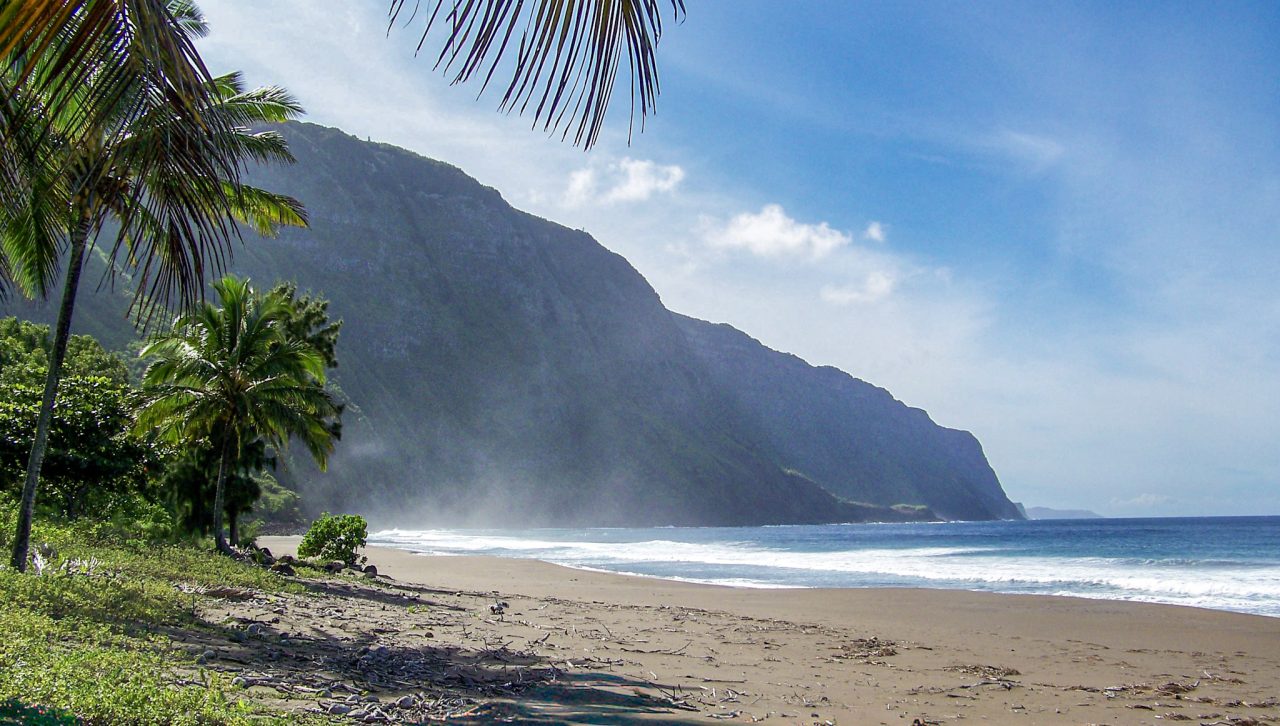
Lead Photo: © Beat of Hawaii at Kalaupapa many years ago.
By Rob and Jeff, Beat of Hawaii.
None of these readers set out to talk about the same thing. One is a park, one is a ruin, and one is a beach. Yet the conversation keeps arriving in the same room, where someone has already decided what a place is for and the people who love it were not asked.
There isn’t a neat answer waiting at the end of any of these. Kalaupapa is closed again with no timeline, Coco Palms has the money but not a single wall standing, and the beach club model is spreading to other properties as we write this.
Every one of these stories will move again, and when it does, the readers you just heard from will be the first to say so. That’s the part we can’t get anywhere else, and it’s why we send the next dispatch to your inbox before the news catches up.
If one of these voices sounds like something you’ve thought yourself, tell us below, and join us so you don’t miss what happens next.
Get Breaking Hawaii Travel News

Regarding the Mauna Kea fee. This is not a new fee! It’s only feels new if you previously booked a condo or house from Mauna Kea Reality as the beach , parking , resort charging and gyms are included in their package. You have always paid an additional fee if you book through an outside firm or VRBo etc. We shop both Mauna Kea reality and outside firms to see where we can get the best deal and recently, it’s been book through an outside firm and pay the fee as that has been less than the same unit if rented from Mauna Kea Reality with no added fee.
Thanks BOH for keeping us in the know!
I can understand why descendants want Kalaupapa treated differently than any other national park. Its history deserves extraordinary care and it feels like NPS botched it completely on the first go around.
The beach club fee doesn’t bother me because nobody is forcing me to pay it. What does concern me is that it’s becoming a business model spreading to more places in Hawaii.
Every time Coco Palms enters the news, I feel equal parts hopeful and skeptical. After so many years, it’s hard not to. It still seems like another roadblock will appear and keep pushing this down the road, half billion or not.
I believe that it is sacred ground.
And full of irony- the place that folks once were exiled to, for
Having a disease with no known cure, now to become a tourist attraction?
$$$$$$$$$$$$$
Re Kalaupapa, the National Park Service has no authority to operate tours without the express authority of DHHL who owns the land. DHHL is a land trust, and the beneficiaries must be a part of the conversation. Not every space in Hawaii must be made available to visitors. For many, this is a very emotional issue, and tourist desires to visit must take a back seat.
I’ll say it again just like I’ve said when I firsat read about the Coco Palms “coming back to life” so many years ago. If it happens before I die, I’ll be shocked…. and I think I’ve got at least another 25+ years in me. 😉