

Hawaiian Airlines is soon to have head to tail remakes on its aging Airbus A330s, and get nearly 20-year-old Boeing 737s to replace its even older interisland planes. All while leaving the future of its much younger A321neos completely undecided. Alaska Air Group has now laid out plans for two of Hawaiian’s most familiar fleets, yet 18 aircraft that serve a large number of nonstop routes between Hawaii and the mainland remain a mystery.
We’ve flown all of these aircraft over the years, including Hawaiian’s inaugural A321neo flight in 2018, and have watched their roles change since Alaska purchased the airline. The next major changes begin in 2028, with some tangible improvements in store for passengers, a few things we’ll be sorry to see disappear, and a decision Alaska now says could take another year or two.
Hawaiian’s next interisland planes are actually old friends.
The Boeing 737-800s that will begin replacing Hawaiian’s 717s in 2028 aren’t new airplanes. They’re coming from Alaska’s existing fleet, where many have spent years flying between the mainland and Hawaii. We’ve flown them countless times, photographed and reviewed them, and watched newer Boeing MAX aircraft gradually take over some of their routes in recent years.
When we investigated the age of Hawaiian’s incoming 737s, Alaska’s annual report provided the answer missing from its announcement. Its 59 passenger 737-800s averaged 17.7 years old at the end of 2025. They’ll average approximately 20 years old when the Hawaiian transition begins, although Alaska hasn’t said which individual planes it will transfer.
That sounds old for a replacement fleet, until you consider what Hawaiian’s 717s have been doing. Those aircraft averaged 23.7 years old at the end of 2025, and some have flown as many as 16 short flights in a single day. All those takeoffs and landings accumulate wear that longer mainland flights don’t produce nearly as fast. Alaska says the 737-800’s airframes and engines can handle the demanding schedule, and the company already has extensive experience maintaining them.
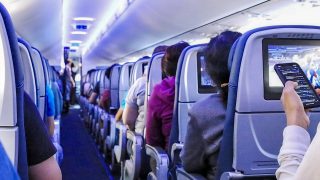
Passengers will also see some welcome improvements. Hawaiian’s refurbished 737s are promised 16 First Class seats, twice the number on the 717, along with more than 30 Premium Class spots, reclining Recaro seating, charging outlets, device holders, and free Starlink Wi-Fi. They’ll also have more cargo space, which is especially useful for surfboards and other oversized belongings that can be challenging on smaller aircraft.
But the 717’s beloved two-seat side will disappear. Its unusual two-and-three seating arrangement has let couples fly together without a stranger beside them, and solo passengers avoid middle seats entirely on one side. The 717 has just one middle seat across each five-seat economy row, while the 737’s three-and-three arrangement has two. Every economy row gains another middle seat, no matter how attractive the refurbished cabin becomes.
Capacity and frequency are questions, too. The 717 carries 128 passengers, while Alaska’s existing 737-800s carry 159 to 161, depending on the configuration. That’s roughly a quarter more seats per departure, letting Alaska accommodate the same number of travelers with fewer flights if it chooses. The airline promises frequent service but hasn’t committed to preserving today’s exact departure schedule. For residents traveling between islands for work, medical appointments, and family matters, having a flight at the right time can matter more than having a larger airplane.
The change is already getting a preview. Alaska-branded 737s began supplementing Hawaiian’s interisland service on October 3 with three daily Honolulu-Kahului round trips. Those aren’t the permanent Hawaiian-branded replacements, which remain scheduled to begin arriving in 2028 with Honolulu-based crews following operational integration, but travelers can now experience the aircraft type that will eventually take over.
Hawaiian’s A330s will look new inside, with some compromises.
Alaska has taken a very different direction when it comes to Hawaiian’s Airbus A330s. Rather than replace them with new airplanes, the company plans to invest heavily in completely redesigned interiors, beginning in 2028, giving these widebodies another chapter of service in and out of Hawaii.
We happened to be flying a Hawaiian A330 from Papeete to Honolulu on September 29 when Alaska revealed the final configuration. Having flown these aircraft many times in economy, Extra Comfort, and First Class, we could look around the cabin and see exactly what would change. The odd, at best, first-class seats are long overdue for replacement, while today’s extra-legroom seating has been one of our favorite features of Hawaiian’s long-haul planes.
The redesigned A330 will go from 278 to 254 seats, with 22 lie-flat suites with privacy doors, 28 new premium economy seats, 48 extra legroom seats, and 156 standard economy seats. That’s 36 fewer regular economy seats, a significant reduction on an aircraft that Hawaiian has long used for long mainland, international, and South Pacific flying. With fewer standard seats to sell on each refurbished aircraft, budget-conscious travelers could find lower-priced availability more limited on popular flights, although whether fares actually rise will depend on demand and competition.
As we reported when Hawaiian announced the new A330 cabins, passengers buying Premium Reserve will finally have a true premium economy option, with 38 inches of pitch, wider seats, leg and calf rests, and larger entertainment screens. That’s appealing to some as an alternative to paying for First Class on a long flight, depending on what Alaska ultimately charges.
Today’s Premium Class, however, loses some of its benefits in the process. The extra-legroom seats we’ve enjoyed, which generally provide about 36 inches of pitch, will have just 34 inches after renovation. There will also be 20 fewer of them. Hawaiian is creating a new, more expensive, distinct category above Premium Class while reducing space in the current one.
One thing we’re particularly glad to see remain is the A330’s two-four-two economy arrangement. Those window-side pairs are among the reasons we’ve long liked flying this airplane, especially compared with the three-three-three economy seating on Hawaiian’s newer Dreamliners. The redesigned A330 will also gain updated entertainment screens and charging options throughout the cabin. The current AC plugs are worn from use, and we’ve started using British adapters that hold the charger in the plug.
There is still a question about how many A330s will actually receive the makeover. Alaska’s September announcement describes renovations for its 24-aircraft fleet, but its June 2026 financial filing projected four A330 departures by the end of 2028, leaving 20. The newer announcement may represent a change in plans, although Alaska hasn’t publicly reconciled the figures or provided a complete aircraft-by-aircraft renovation schedule.
Nor has Alaska said exactly how long it intends to keep the refurbished A330s. Investing in new cabins makes sense if the planes have some years of useful service remaining, and Alaska is already finding new uses for them that have nothing to do with flying to and from Hawaii. Beginning in May 2027, Hawaiian A330s will operate four weekly Seattle-Osaka flights, followed by three weekly Seattle-Papeete flights in June. Both routes bypass Honolulu entirely, as we recently reported in Alaska Expands Pacific Network, Bypassing Hawaii Again. Alaska hasn’t said whether those assignments will mean fewer A330 flights serving Hawaii.
Hawaiian’s Dreamliners are headed elsewhere.
The Boeing 787 Dreamliners were supposed to become Hawaiian’s new long-haul flagship before Alaska took the helm. We toured the first one when it arrived in Honolulu in 2024 and flew it in First Class from Los Angeles to Honolulu in October 2025, just before that route lost the aircraft. We’ve followed the Dreamliners from their much-delayed arrival through the changes that followed Alaska’s acquisition.
Today, the planes are increasingly associated with Alaska’s international expansion from Seattle, flying under Alaska branding to destinations including London and Rome. Their new interiors will receive further upgrades, while Hawaiian’s A330s remain the focus of its own long-haul cabin investment.
The 787 hasn’t entirely vanished from Hawaii flying. Alaska is operating Dreamliners between Seattle and Honolulu and has scheduled additional Seattle-Maui flights during the holidays. Those Hawaii assignments now sit alongside Alaska’s growing international network, where the Dreamliners play a much larger role than originally envisioned when Hawaiian first ordered them.
Hawaiian’s youngest fleet may have to wait longer for an answer.
Hawaiian has 18 Airbus A321neos, which averaged just seven years old at the end of 2025. They fuel-efficiently carry 189 passengers and have become an important part of Hawaiian’s nonstop service between the mainland and Hawaii, particularly on routes that don’t need the capacity of an A330.
We were aboard Hawaiian’s inaugural A321neo flight from Maui to Oakland in January 2018, when these airplanes represented an exciting new direction for the airline. We found the economy seats reasonably comfortable despite their narrowness, and liked the Hawaii-inspired interior, convenient device holders, and thoughtful storage. We also paid for Extra Comfort and especially appreciated the unusual two-across pairs available in parts of that cabin.
The aircraft had shortcomings too, including the absence of conventional seatback entertainment screens and food that we felt needed improvement. But Hawaiian, late to the party of direct to island flights that Alaska championed, had found a useful airplane for serving mainland cities nonstop from Kauai, Maui, the Big Island, and Honolulu without filling a much larger widebody.
Last December, Alaska President and CFO Shane Tackett described 18 A321neos as too small a fleet to sustain indefinitely. He said the company would eventually need to double its number or reduce it to zero, and he didn’t see a reason to expand it then.
When Alaska subsequently announced its enormous Boeing aircraft order in January, committing to 105 Boeing 737-10s and five additional 787-10s, it didn’t include the A321neos. We examined whether Hawaiian’s relatively young Airbus fleet could eventually disappear, as happened when Alaska eliminated the Airbus aircraft it inherited with the purchase of Virgin America.
Alaska has committed heavily to Boeing aircraft, and maintaining a relatively small Airbus fleet means supporting different pilot training, parts, maintenance procedures, and operating requirements. On the other hand, Hawaiian already has years of experience with these airplanes, and replacing 18 relatively young aircraft would require both a suitable alternative and a convincing business case, both of which could be problematic.
The Boeing 737 MAX family will likely provide an alternative eventually, but Alaska hasn’t identified a specific replacement or announced an A321neo retirement schedule. Nor has it committed to buying more Airbus aircraft or giving Hawaiian’s existing A321neos a major cabin renovation comparable to the A330 program.
On September 30, Aviation Week reported that Alaska expects to take another year or two to decide the A321neo fleet’s future. Tackett said the airline has nothing immediate planned to move away from these aircraft, even though he previously suggested the relatively small fleet is unsustainable over the longer term.
Alaska’s June fleet forecast still showed all 18 A321neos operating through the end of 2028. For passengers who depend on Hawaiian’s mainland nonstops, there’s no announced aircraft change to plan around today, and Alaska hasn’t said which flights, if any, would be affected if it eventually replaces the A321neos.
Of all the changes coming to Hawaiian’s fleet, which matters most to you: the new cabins and seating, the replacement of the 717s, or the uncertain future of the A321neos?
Lead Photo Credit: © Beat of Hawaii at HNL.
By Rob and Jeff, Beat of Hawaii.
Some of Hawaii’s most meaningful parts are the ones visitors walk right past without knowing they are there. We’ve spent nearly 20 years finding them firsthand for BOH as full-time Hawaii residents reporting on travel, culture, and island life, and telling you what they mean for your trip. Join us →
Get Breaking Hawaii Travel News




If Alaska’s 737s are being repurposed for Hawaiian’s interisland flights, the 3×3 configuration isn’t really an issue. So more people will get stuck in the dreaded middle seat? It is a short flight. I can think of much worse, such as being stuck in a stuffy standing room only subway train doing commute hours.
Aloha~ Not really understanding the uproar about having the B737-800 become the backbone of inter-island fleet. Just flew back and forth from Lihue in First and Premium economy with the recaro seat configuration. Comfortable seats in both class of services, overhead bins could have been a bit larger (still large enuf for our carry on and not a major factor on inter-island) and decent sized toilets. Unlike American’s tiny toilets whom we flew to Philadelphia in their version of the A321. I agree losing the 2 seater size is unfortunate, however, the huge upscale in seat comfort negates the loss. I venture the B737-800 will not be the ultimate solution and we may see other B737s rotate thru the island fleet. There is a maintenance benefit in having a fleet super close to the repair shop. Would like to see the A321 stick around, but guess the B737 will be in our future. Change is inevitable, best to embrace it. Cheers