
Hawaii tourism has been beaten up by storms again this month, and most attention has understandably focused on their impact and what fewer visitors mean for Hawaii. We’re looking in the opposite direction too. Could 2027 turn out to be one of the best times to visit Hawaii in years?
We’re not predicting that it will. In fact, some BOH readers expect almost the opposite, arguing that Hawaii will respond to fewer visitors by finding new ways to push prices even higher.
But after nearly 20 years of writing about Hawaii travel, we’ve watched two extraordinary periods when circumstances shifted leverage toward visitors. They happened for completely different reasons, during the 2007-09 recession and again around Covid, and both brought combinations of lower prices, unusual availability, and fewer people competing for the same Hawaii experience.
That leaves a question we’re increasingly curious about ourselves. Does softer demand finally give Hawaii travelers some leverage again in 2027, or have airlines, hotels, and the rest of Hawaii travel learned how to protect higher prices no matter what, even when fewer people are here?
Hawaii travel was changing before Lowell.
Hurricane Lowell didn’t create the visitor conditions we’re seeing. Last December, we wrote about how Hawaii travel was getting strange heading into 2026, including availability at places where we’d repeatedly failed to find it before, even though broad price cuts hadn’t followed.
By summer, our own West Maui booking led us to discover that the Kaanapali versus Wailea value equation had changed more than we expected. Another shift was also showing up in the state’s numbers. Visitors weren’t necessarily spending less money on Hawaii, but they were buying less time here. The average Hawaii vacation fell from 8.83 days to 7.59 days in one year, meaning nearly 30 hours disappeared from the average trip.
UHERO, the University of Hawaii’s economic research organization, had already been warning about weaker Hawaii tourism well before Lowell. Its December 2025 forecast called for declining Hawaii visitor arrivals and real spending during 2026, while its May update anticipated growth to weaken sharply as 2026 evolved and then average just 0.2% in 2027. UHERO has since revised that 2027 outlook upward.
The newest UHERO forecast, released September 25, shows statewide arrivals in decline for 2026, down just over half a percent, before rebounding about 2% in 2027, with that sharp drop in reported length of stay pulling the 2026 average daily visitor census down more than 6%. Inflation-adjusted visitor spending is forecast to drop 1.6%.
The revisions reflect how difficult Hawaii tourism has become to read now. UHERO’s forecast for 2027 arrivals has changed substantially in just four months, while UHERO itself is questioning whether the unusually sharp drop in reported visitor length of stay may partly reflect problems in the underlying data itself. The direction may be softer, but even the economists following it most closely are working with an unclear picture.
Then the storms added another reason to hesitate.
Kauai shows how abruptly visitor demand can change. Before Lowell, the island wasn’t experiencing an arrivals problem at all. During the first six days of September, direct domestic passenger arrivals were running about 5% ahead of comparable days last year.
After Lowell, when visitors were asked to reschedule or go elsewhere, that changed almost overnight. As we reported this week, Kauai arrivals were still down nearly 62% during the latest five-day period we examined, even after most accommodations, restaurants, shops, tours and activities were operating and the island was welcoming visitors back.
That immediate drop won’t continue indefinitely, and some postponed travelers will simply come later. But Lowell landed on top of a statewide tourism slowdown already developing, rather than causing it. UHERO now expects Kauai arrivals to decline more than 6% for 2026, while statewide arrivals are forecast to resume modest growth of about 2% in 2027 as Kauai recovers and energy markets hopefully improve.
Even that recovery isn’t assured. UHERO says persistently high oil prices could also mean weaker tourism next year, adding another variable for airlines and travelers heading across the Pacific.
We’ve watched the Hawaii tourism balance shift before.
In 2009, BOH looked very different because Hawaii travel deals were suddenly everywhere and we were reporting them. Airfares dropped sharply, hotels became far more negotiable, and availability opened up in ways we hadn’t really seen before. What we remember most isn’t the old prices themselves, but how quickly the balance shifted once businesses had more rooms and seats to fill than travelers competing to take them.
Those prices were in another era, and we’re not suggesting anything remotely similar for next year. Hawaii’s costs, taxes, and lodging market have changed too much for that. What happened between businesses and their customers matters more. Hotels had rooms to fill, airlines had seats to sell, and visitors suddenly had choices they hadn’t seen when demand was stronger. Travelers regained leverage.
Covid created another kind of window. The circumstances in 2020 couldn’t have been more different, and nobody would choose to repeat what happened then. But as travel resumed, we started finding prices that had seemed impossible before it stopped.
By January 2021, we were finding $99 one-way Hawaii fares from places as far away as Chicago and Dallas. Later that year, a Maui airfare war pushed some West Coast fares down to $84 each way. Then demand came roaring back. Hotel rates soared, rental cars became scarce and often ridiculously expensive, and the advantages visitors had briefly enjoyed disappeared incredibly fast. The comparison shows how quickly weaker demand changed travelers’ choices, and how quickly those choices disappeared again when demand returned.
Hawaii has gotten very good at getting more money from fewer visitors.
This is where 2027 could behave differently. For years, BOH readers have watched Hawaii move toward fewer visitors who spend more, and many believe that model can continue even if demand softens further.
Last October, when arrivals were down while visitor spending rose more than 8%, reader Katie summed it up in our comments: “More money, fewer tourists.” We explored that contradiction in Hawaii Finally Got Its Way With Visitors: Spend More, Stay Less, where longtime visitors described shortening trips or leaving Hawaii behind as costs continued climbing.
Another reader put the argument even more directly: “Someone will still pay the price we won’t or can’t.” That comment became the premise of Return Visitors Won’t Pay? Hawaii Knows Who Else Will, and for a while Hawaii appeared to just prove that point over and over.
We’re still hearing the other side too. One couple who spent three weeks on the Big Island every year for nearly a decade told us they had stopped coming after their resort increased prices dramatically. Other longtime visitors are shortening trips, skipping years or choosing somewhere else, while some are still booking Hawaii even as they call the next visit their last. One reader already booked for March 2027 called it her last trip.
The question isn’t whether Hawaii can charge more. It clearly has. It’s how long the equation works when enough visitors change what they buy, how long they stay, or whether they come to Hawaii at all.
Softer demand doesn’t guarantee cheaper Hawaii.
Airlines have an obvious alternative to lowering fares when demand weakens. They can remove seats, and we’re seeing that in the Hawaii schedule changes we’re reporting today.
That response could keep airfare high even with fewer people traveling. We saw that earlier this year when a BOH reader pricing Portland-Kauai for summer found a standard economy roundtrip at $1,329, which we confirmed as one of the highest West Coast Hawaii economy fares we’d ever seen. So summer 2026 Hawaii airfares had reached a new ceiling well before Lowell arrived.
Hotels can protect rates rather than fill every room. That’s because vacation rental supply remains under regulatory pressure, particularly on Maui, and Hawaii’s accommodation taxes increased again recently while labor, insurance, and other operating expenses remain high.
We made the same point a year ago when UHERO forecast weaker tourism for 2026: a Hawaii tourism slowdown doesn’t automatically mean lower travel prices.
The costs themselves make a return to old Hawaii pricing unlikely. What could change is value around the periphery: more frequent airfare discounting rather than sales on some routes, hotel offers and packages where there weren’t any, cheaper rental cars, better vacation rental pricing, and less pressure on reservations overall.
Some of that is already showing up.
Hawaii certainly hasn’t gone on sale in 2026. In some categories, prices remain stubbornly high even when demand isn’t.
But we’ve encountered changes ourselves. Our Maui rental car had originally been around $100 a day. By checking again immediately before the trip, we rebooked the same Maui rental for about $38 a day. On West Maui, the ocean-view room we expected to cost considerably more came in at a price that changed our assumptions about Kaanapali before we even arrived there.
Readers are finding occasional examples too. Earlier this year, one longtime Maui visitor who had planned to go to Puerto Vallarta because Maui had become too expensive told us that when those plans changed, they checked Maui again and found prices had dropped enough that the two trips had become virtually the same price.
Availability may ultimately matter as much as headline prices. A Hawaii vacation feels different when your favorite restaurant is no longer impossible to reserve, rental cars aren’t scarce and over the top, desirable rooms remain available, and visitors aren’t competing for every popular experience. We’ve lived here through periods when the islands felt overwhelmed and others when there was simply more room to breathe. Visitors notice that difference too, even when it doesn’t directly reduce the cost of their trip.
A drier Hawaii winter is now likely too.
Another 2027 factor has nothing to do with tourism demand. NOAA’s September Hawaii seasonal outlook suggests below-normal precipitation across all of Hawaii beginning in the October-November-December period and continuing through March-April-May 2027.
A below-normal season can still include Kona storms and periods of heavy rain, but the odds now lean drier across much of the winter and spring travel season. NOAA also identified El Niño as one factor favoring the unusually active 2026 Central Pacific hurricane season we’ve been living through, while the same climate pattern now helps explain why forecasters expect a drier Hawaii winter.
Drier isn’t universally good news for Hawaii either. Reduced rainfall can dry vegetation and worsen drought and wildfire conditions if the pattern persists, so what may look favorable from a sunny winter travel perspective can also have very different implications for the islands.
2027 may also look very different depending on the island.
A statewide tourism number can hide a lot in Hawaii. Kauai is dealing with the aftermath of Lowell, while Maui continues through a recovery that began for entirely different reasons. Oahu has a much larger and more diverse visitor base, and the Big Island enters 2027 with its own mix of factors.
UHERO sees those differences continuing. Maui arrivals are forecast to grow about 2% next year as its recovery continues, while Honolulu is also expected to firm. Kauai’s numbers should rebound as the storm effect fades, while Big Island growth changes as some of this year’s factors fade away.
That makes us skeptical there will be a simple answer on whether Hawaii will be cheaper or less crowded next year. One island could offer unexpectedly good hotel value while another remains expensive. Airlines could discount one route while cutting capacity on another. Those less obvious differences are where some of the best opportunities may eventually appear. They’re also why statewide arrival totals alone won’t tell travelers when or where the balance may have shifted.
The next few months should tell us much more.
Hotel rates and occupancy will show whether properties begin competing harder for guests or continue holding prices. Airline schedules and fares will tell us whether carriers respond to softer demand with lower prices, capacity cuts, or some combination of both, while Kauai will show how quickly travelers return after Lowell.
If you’re already looking at Hawaii for 2027, we’d especially like to hear what you’re actually finding. Are airfare, hotels, and rental cars looking better than they did this year, worse, or simply different?
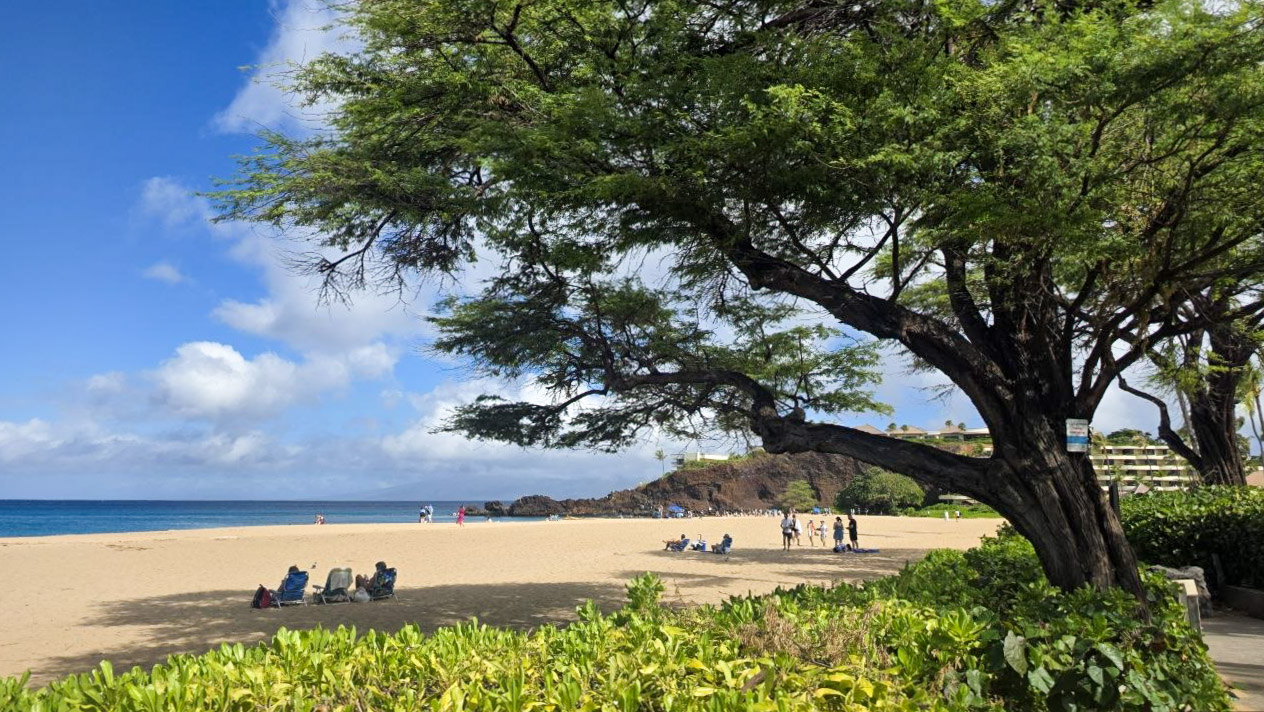
Lead Photo Credit: © Beat of Hawaii at Black Rock, Kaanapali, Maui.
By Rob and Jeff, Beat of Hawaii.
Some of the most meaningful parts of Hawaii are the ones visitors walk right past without knowing they are there. We’ve spent nearly 20 years finding them firsthand for BOH as full-time Hawaii residents reporting on travel, culture, and island life, and telling you what they mean for your trip. Join us →
Get Breaking Hawaii Travel News






Just returned from our annual two weeks in Maui. Things have changed and we don’t enjoy it as we once did. I don’t believe we will return in 2027. The plan is to trade our unit for a vacation elsewhere.
As someone who gets to Maui four times a year (for 23 days each trip), I can certainly tell you that Maui has not gotten cheaper over time. If it wasn’t for about a dozen close friends on the island, who keep me coming back, I’d have opted for Polynesia or Mexico. Hawaii has gotten greedy and assumptive that at the least well heeled folk (which I am not) and those willing to be duped will continue to fill their coffers. I travel all over the globe and nobody beats Hawai’i’s accommodation taxes and related fees. But my aikane’s keep me coming back over and over. Love can trump the financial aspects for some of us.
Simple fact no value means no desire. Move or restructure the airline routes until convenience don’t even bring in any value. IMO Hawaii is banking on the rich where money don’t matter for all it’s future visitors and other folk have to pay the piper or just get out. Don’t get me wrong you see up charges in airline fares, hotels, restaurant tipping and service fees and even car rental return inspection charges. Where’s the value? There is none. Airlines have found the only solution is to reroute planes to other locations to bring in new and unsuspected victims.