
A visitor recently asked whether Hanauma Bay was worth fighting for a reservation, or whether another Oahu beach could offer nearly as much without the trouble. It’s a question worth asking before committing valuable planning and vacation time, money, and transportation to a place you may be questioning.
Some reservations can unlock extraordinary experiences. Others get you into a park for a relatively short visit, sometimes with less to see or do than expected. We’ve come away delighted by some of these places and slightly underwhelmed by others, and the difficulty of getting in hasn’t always matched what we found once we got there.
Hanauma Bay still deserves the effort.
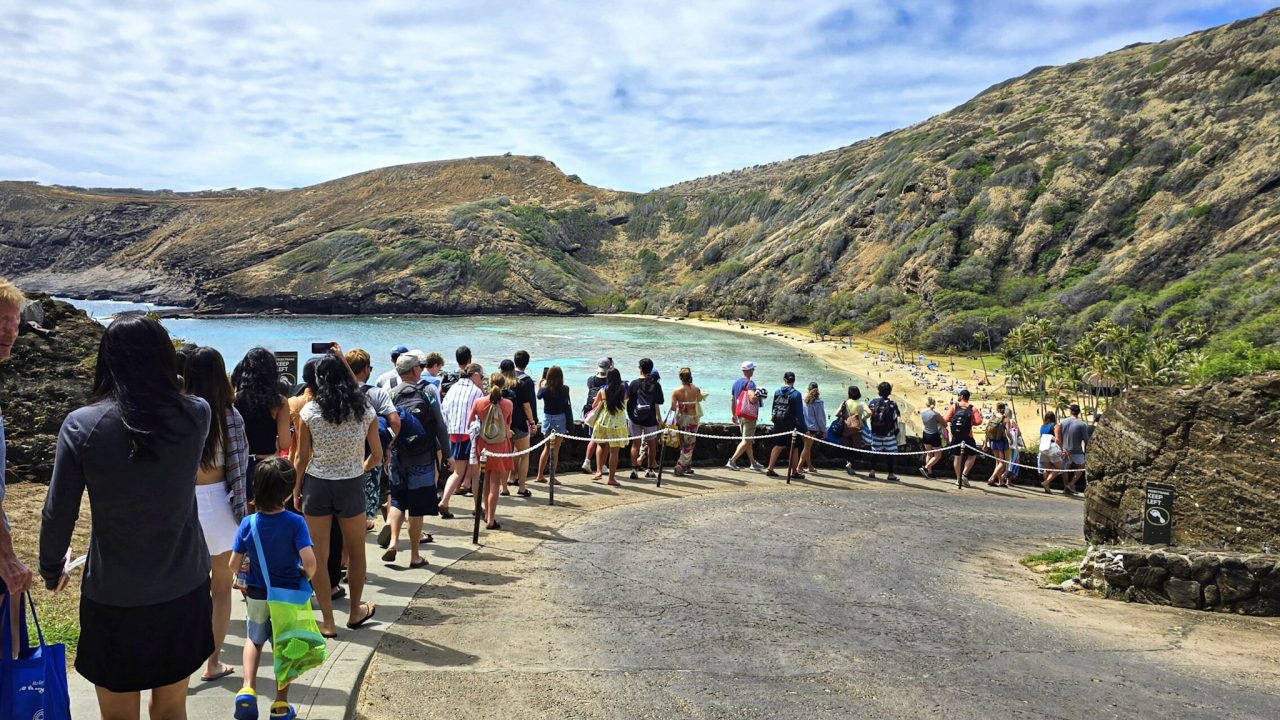
When we returned to Hanauma Bay, it was still busy but more manageable than we remembered. We entered as residents, without competing for a visitor reservation, though we still went through the educational process and saw how structured the arrival had become. As you see in our photo, we walked down to the bay rather than taking the tram, so that spectacular setting unfolded ahead of us.
The marine life, scenery, lifeguards, showers, and restrooms make Hanauma a great place to spend several hours. But you won’t feel alone there, by any means. Another Oahu beach might suit someone who simply wants an afternoon on the sand, but it may not necessarily offer the same snorkeling experience. Water conditions vary, and even at Hanauma, replete with lifeguards, can’t eliminate the risks of currents, weather, and surf.
The City of Honolulu opens reservations at 7 a.m. Hawaii time, two days ahead, with $25 admission for nonresidents 13 and older, plus an online fee and $3 cash-only parking. Limited walk-in admission remains available, although a reservation doesn’t guarantee a parking space.
On the reservation page, you can also book the Roberts Hawaii transportation package we covered earlier, starting at $65 per adult plus a 6% booking fee, and it includes transportation from Waikiki and admission. Roberts advertises reservations up to 60 days ahead, while the city’s page still says a month. For Waikiki visitors without a car, that option may be worth the premium.

Haena is expensive if all you want is Kee Beach on Kauai.
For two adults planning a short beach visit, the Haena shuttle costs $90 including admission. Driving would cost $30 for one parking period and entry for both ($20 parking plus $5 admission per person), but GoHaena warns that reservations and parking sell out immediately when they open at midnight Hawaii time, 30 days ahead. The shuttle avoids that competition, although its cost and schedule then become part of the planning.
Kee Beach is beautiful, with Napali rising beyond it, but swimming conditions of course aren’t guaranteed. Someone wanting a quick beach stop might reasonably decide against the expense, particularly with children or others who won’t enjoy a longer outing. We’d opt for Hanalei Bay, but others will have their own preferences.
For a serious hiker, the calculation changes. Access to the Kalalau Trail and Hanakapiai, when open, can justify organizing much of the day around Haena. We’ve experienced Napali from land, sea, and air, and each offers something entirely different. A boat provides remarkable views of the cliffs, but can’t replace walking into the wild landscape.
Kokee also offers visitors a chance to see Napali from above without the demanding coastal hike. As we reported in our latest Kokee and Waimea Canyon reopening article yesterday, both parks reopened November 7 following the hurricane closures, although access to some trails and facilities remains limited.
Haena admission covers Kee Beach and permitted day hiking to Hanakapiai, including the famous waterfall trail. Continuing along the coastal Kalalau Trail beyond Hanakapiai requires a separate camping permit, even for a day hike. Recent storm damage also makes it essential to check current trail conditions.

Iao Valley on Maui is better without high expectations.
When we returned to Iao Valley, clouds initially hid the needle before finally revealing it. We enjoyed the paved paths, stream, and surrounding mountains, but felt slightly underwhelmed compared with our expectations and recalling past visits. As residents, we hadn’t needed a reservation or paid visitor admission, so there’s that.
We’ve described Iao as somewhere we go to clear our minds, and that peaceful atmosphere remains much of its appeal. The valley’s historical significance, including the 1790 Battle of Kepaniwai, is interesting, but visitors expecting a substantial hiking adventure may still be disappointed.
The paved walk is about 0.6 miles. Nonresidents pay $5 per person and $10 per vehicle, with reservations available up to 30 days ahead. We’d combine Iao with Wailuku or another Central Maui stop rather than rearrange a vacation around it.

Haleakala sunset is no easy fallback.
We’ve driven up Haleakala for sunrise countless times, and it’s an experience we’ve never forgotten. But getting there means leaving in the middle of the night, driving a winding mountain road, and standing in the cold while hoping the weather cooperates and the clouds move away. The $1 vehicle reservation, separate from park admission, is the least demanding part.
Sunrise reservations are released 60 days ahead, with another allocation two days before the visit. NPS says they often sell out within 15 minutes. We’d make the effort for sunrise just because it is so unforgettable, but a group already reluctant about the early departure and long drive may find the experience exhausting before the sun ever appears.
Sunset used to be our quieter alternative, and it’s a gem. That changed during our December 2025 visit, when we arrived two hours early and were among the last vehicles admitted before the entrance was closed. Rangers told us well over 120 more had been turned away that day. Cars turned around and parked along the road, people walked in the cold on narrow pavement, and the serenity we’d remembered was largely a thing of the past.
Sunset remains reservation-free, but NPS now recommends arriving at least three hours early during the busy winter season, warning that an entrance pass doesn’t guarantee access. We’d consider a daytime visit instead, especially if you want to see the crater, enjoy the overlooks, or explore a trail.

Waianapanapa is worth more than a black-sand photograph.
We’ve long enjoyed Waianapanapa for its black sand, lava formations, coastal trail, and dramatic setting. You don’t need to enter the ocean for a worthwhile visit, and dangerous currents and heavy shore break make swimming questionable much of the time. There’s no lifeguard.
The reservation system adds a complication to this iconic Road to Hana stop. Visitors must arrive within the first 30 minutes of their reserved period and leave by the end of the parking slot. With traffic, weather, and stops along the drive, that fixed arrival time can become stressful. Nonresident admission is $5 per person plus $10 parking, with reservations available up to 30 days ahead.
The park has also been undergoing major improvements we reported on in June, including new paths and signage, a new comfort station, a sewage treatment system, and repairs to Honokalani Road. Construction has changed parking and beach access, with visitors directed through the west end of the park and road work scheduled into early 2027.
We’d probably make time for Waianapanapa and eliminate another stop rather than squeeze it into an already crowded schedule. Anyone expecting to rush in, photograph the sand, and leave may find the reservation more trouble than the stop warrants.
Diamond Head still earns a place on a first Oahu visit.
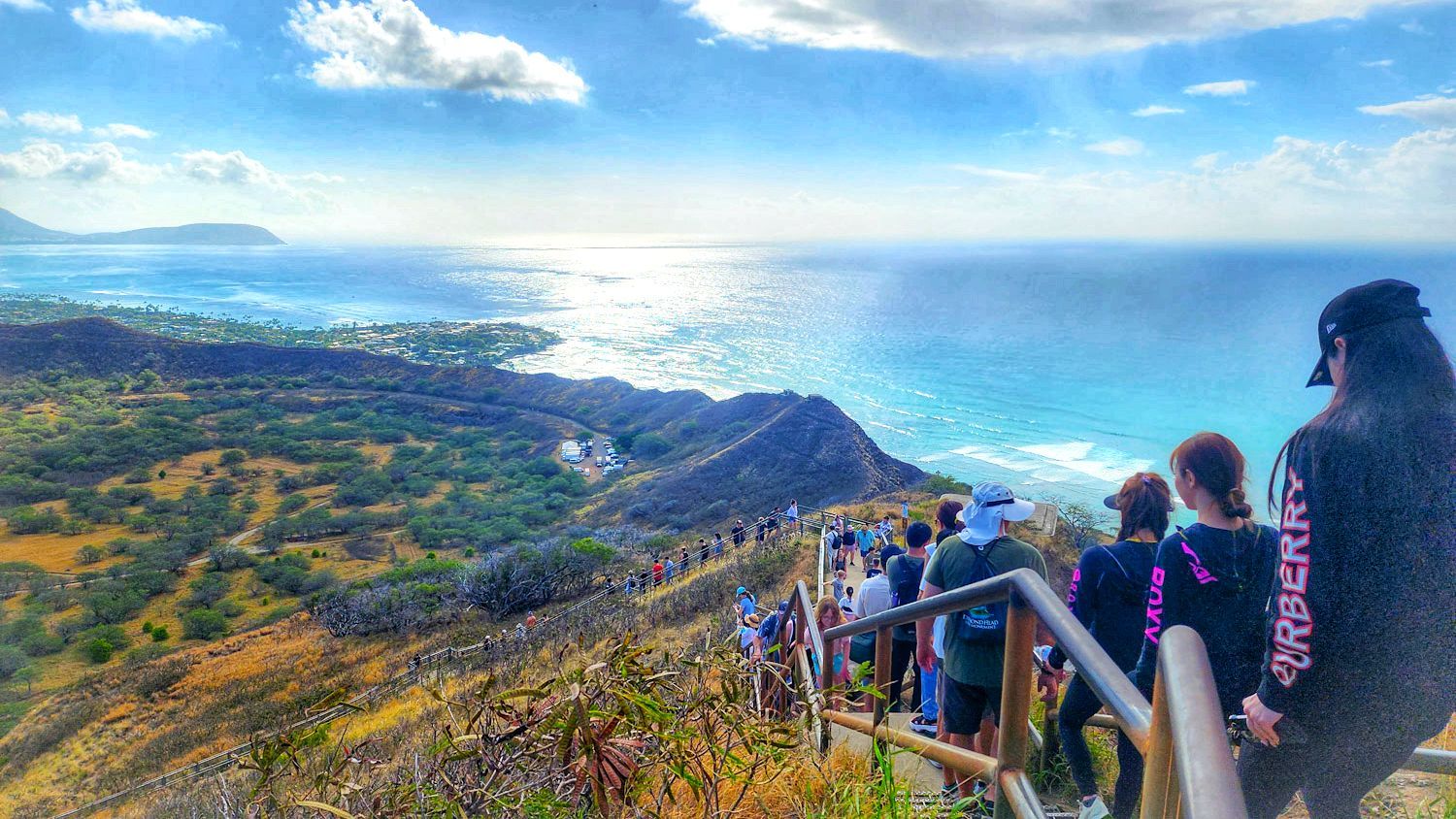
Before reservations, we repeatedly drove up Diamond Head to hike, only to find no parking. That made us receptive to managed entry, particularly if it reduced congestion on the trail. We’ve hiked Diamond Head for decades and still recommend the summit view over Waikiki for anyone, especially first-time Oahu visitors.
It’s a real uphill walk; we’ll call it moderate overall, with stairs and uneven sections, so it’s not for everyone. Returning visitors who have already made the climb may prefer to spend their morning elsewhere. Reservations are available up to 30 days ahead, with $5 nonresident admission and $10 parking. Walking in eliminates the parking charge, but not the entry reservation.
Needing a reservation in this case doesn’t necessarily mean getting one will be exceptionally difficult. We’d book a preferred morning time without treating Diamond Head like a ticket that requires extraordinary effort.
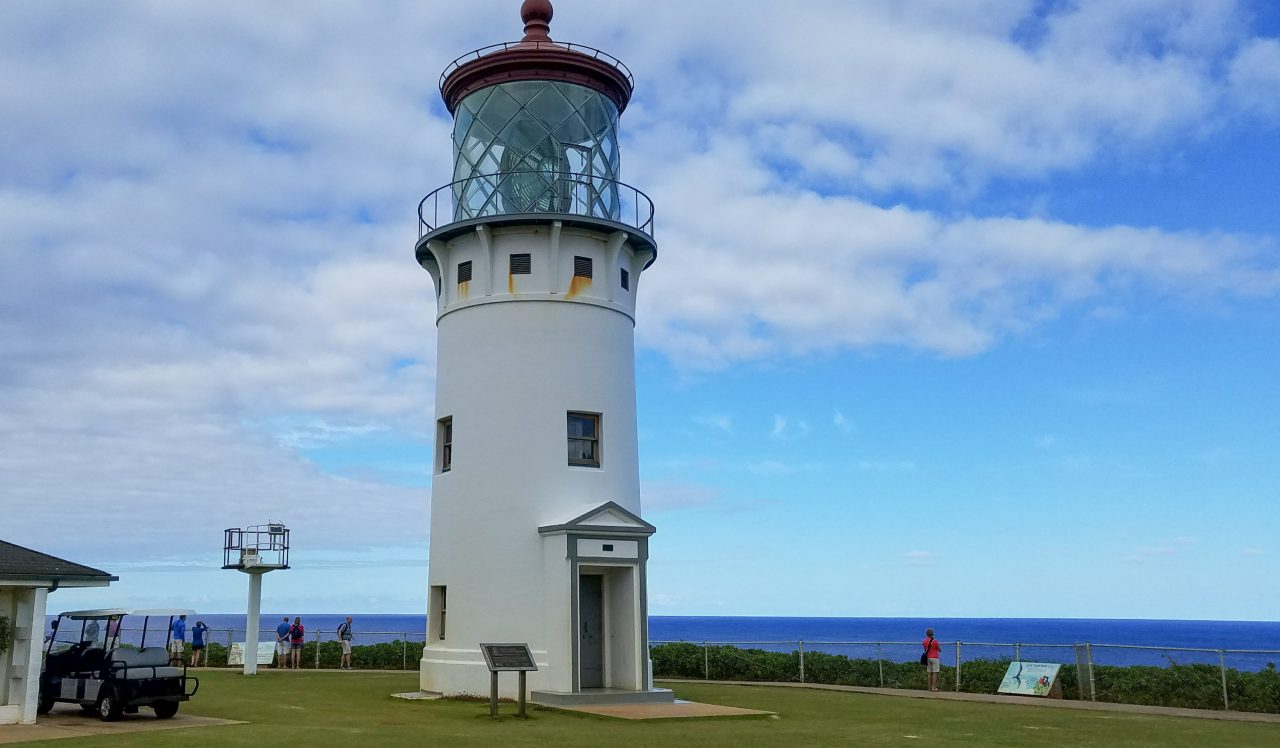
Kilauea Point is for wildlife, not a lighthouse tour.
Visitors sometimes arrive at Kilauea Point National Wildlife Refuge expecting to enter the historic lighthouse. Interior tours aren’t available, so the experience focuses on the refuge, its seabirds, and the dramatic coastline.
Someone interested in birdlife, especially the nesting seabirds there, has a good reason to visit. Others may find the public overlook at the end of Kilauea Road sufficient for a distant view of the lighthouse and coastline, although it doesn’t provide access inside the refuge.
Adults 16 and older need reservations, available up to 60 days in advance, with admission currently $11, including the booking fee. Tickets cover 45-minute periods, and longer visits require additional reservations. The usual Wednesday-through-Saturday opening schedule may be a bigger obstacle than obtaining a ticket during a short Kauai stay.

The USS Arizona Memorial is worth planning time around.
When we last visited Pearl Harbor, Arizona Memorial tickets weren’t available, so we spent our time aboard Missouri. It was an extraordinary opportunity to revisit the battleship where Japan signed its surrender, but the two experiences are very different, and we like both.
Last October, Rob found bookable Arizona dates despite conflicting website instructions. The process had become confusing enough that visitors might assume unavailable tickets meant they needed to buy a commercial tour.
The USS Arizona Memorial program is free, apart from a $1 nonrefundable Recreation.gov fee per ticket. Reservations open at 3 p.m. Hawaii time eight weeks ahead and again one day ahead. Limited standby seating may be available, but isn’t guaranteed. Paid tours and other Pearl Harbor attractions are separate purchases, not requirements for visiting Arizona.
For someone coming to Pearl Harbor to learn more and to pay their respects, this is a reservation we’d prioritize before arranging the rest of an Oahu itinerary. Standing at the memorial above Arizona’s sunken hull is an experience no substitute attraction can match.

Volcanoes National Park: You can’t reserve an eruption.
Hawaii Volcanoes National Park doesn’t require advance reservations for entry, just the $30 vehicle admission fee. But anyone hoping to see Kilauea erupt faces a much bigger gamble. When we booked Volcano House months ahead, we couldn’t even get the crater-view room we’d wanted. We stayed for several days in December 2025, between eruptions, watching steam rise from the caldera and a red glow at night, but never saw the lava fountains.
We also encountered extraordinary traffic and parking congestion when the volcano wasn’t erupting. During active episodes, those problems get much worse. And while scientists had briefly become better at predicting the next eruption, that advantage disappeared in October when Kilauea’s behavior changed again.
We’d absolutely make time for the park on a Big Island vacation, even without visible lava. The crater, steam vents, volcanic landscape, and hikes are extraordinary in their own right, wherever access is permitted. But after our experience, we wouldn’t book an expensive stay expecting an eruption to cooperate with our schedule.
Which Hawaii attractions have been worth the reservation hassle for you, and which left you wondering whether the effort was worth it?
Lead Photo – Haleakala Summit traffic on Maui before sunset. © Beat of Hawaii.
By Rob and Jeff, Beat of Hawaii.
Some of Hawaii’s most meaningful parts are the ones visitors walk right past without knowing they are there. We’ve spent nearly 20 years finding them firsthand for BOH as full-time Hawaii residents reporting on travel, culture, and island life, and telling you what they mean for your trip. Join us →
Get Breaking Hawaii Travel News